

Mercury Filling Removal Edinburgh
Old Metal Fillings? Upgrade to a Safe, More Natural Smile.
Mercury and Amalgam Filling Removal in Edinburgh
You’ve had those silver fillings for years. Maybe they’ve started to crack, discolour, or feel uncomfortable. Or maybe, you’re simply tired of seeing metal every time you smile.
At Integrated Dentalcare in Edinburgh, we offer safe, clinically precise mercury filling removal, replacing outdated metal fillings with modern, natural-looking alternatives. In addition, we use a careful protocol that reduces exposure during removal, and we aim to restore your confidence.
Not Just Cosmetic. Not Just Caution. Your Peace of Mind Matters.
People choose to remove amalgam fillings for different reasons:
- Aesthetic: Metal fillings can darken teeth and show when you smile or laugh.
- Health Conscious: You’d prefer to avoid mercury-based materials in your body.
- Functional: Your old fillings may be cracked, worn, or failing without you realising.
Whatever your reason, we make the process safe, seamless, and supportive so you feel fully informed and in control from start to finish.
What Is Safe Mercury Filling Removal?
Amalgam fillings contain mercury alloy, a material once widely used, now often replaced by tooth-coloured, biocompatible alternatives.
Amalgam is roughly half mercury, mixed with silver, tin, copper and zinc. Because it is strong and long-lasting, dentists have used it for about 150 years. Many people know them as silver fillings or mercury fillings. Countries are now phasing them out, as our guide to the UK mercury fillings ban explains.
For amalgam removal at our Edinburgh practice, we follow the SMART protocol (Safe Mercury Amalgam Removal Technique), which the International Academy of Oral Medicine and Toxicology developed. It includes:
- High-volume suction to capture mercury particles and vapour
- Rubber dam isolation to shield other parts of your mouth
- Minimal heat technique to reduce vapour release
- Strict hygiene and ventilation procedures for your protection
- An external air supply, so you breathe clean air during removal
- Cutting the filling into chunks rather than grinding it away
- Plenty of cool water spray throughout
- Protective equipment for you and our team
- An amalgam separator, so we can dispose of amalgam waste responsibly
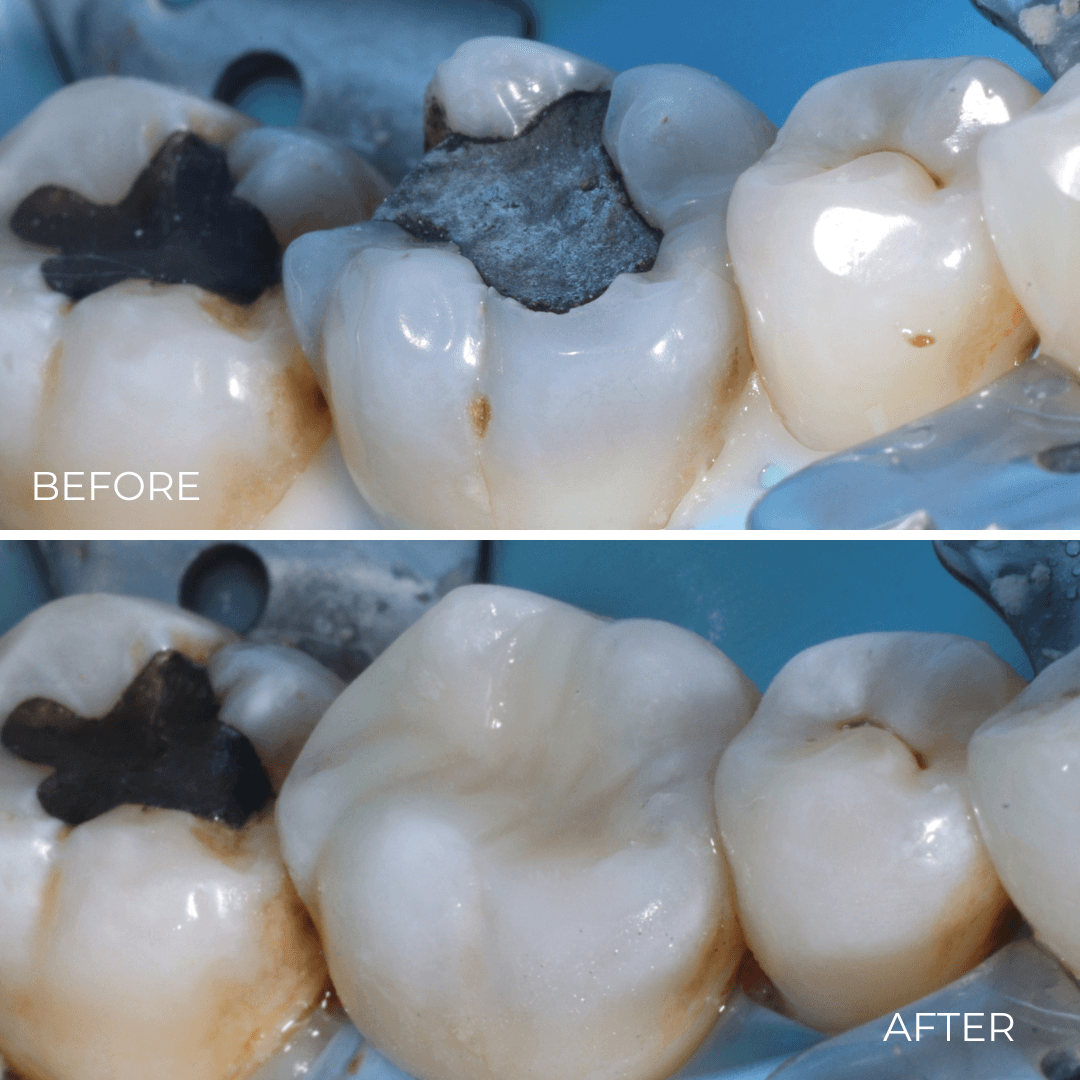
Afterwards, we restore your tooth with modern composite resin or ceramic, which blends in beautifully with the rest of your smile.
Amalgam fillings are considered safe while they are intact. Therefore, we do not recommend replacing sound fillings for health reasons alone. However, if a filling is cracked, worn or leaking, replacing it is often the right step.
Drilling out an amalgam filling releases more mercury vapour than leaving an intact filling in place. For this reason, we use the SMART protocol every time we remove one.
Who Mercury Filling Removal Is For
This treatment is ideal if you:
- Have old amalgam fillings and want them removed safely
- Prefer fillings without metal
- Want your fillings to match your natural tooth colour
- Have concerns about long-term filling integrity or sensitivity

Mercury and Your Health: What to Know Before Amalgam Removal
Mercury is a known neurotoxin. Major health bodies, including the US Food and Drug Administration (FDA), say amalgam fillings are generally safe for most people. However, amalgam releases small amounts of mercury vapour over time, especially when you chew, grind your teeth or have hot drinks. Your body can absorb and retain this vapour, particularly in the brain, kidneys, liver and lungs.
Who the FDA Says Should Avoid Amalgam Fillings
The FDA recommends that the following groups avoid amalgam fillings where possible and appropriate:
- pregnant women, and women planning a pregnancy
- nursing mothers
- children, especially those under six
- people with neurological conditions such as MS, Alzheimer’s or Parkinson’s disease
- people with reduced kidney function
- people with a known sensitivity to mercury
The FDA does not recommend removing amalgam fillings that are in good condition unless it is medically necessary, because removal can briefly increase exposure to mercury vapour. This is one reason we always use the SMART protocol for amalgam removal at our Edinburgh practice.
Galvanic Currents: A Reason Some Patients Choose Mercury Filling Removal
When two or more different metals sit in your mouth, saliva can carry a small electrical current between them. Dentists call this oral galvanism. It can happen when, for example:
- an amalgam filling sits next to a gold crown
- a titanium implant is paired with a cobalt-chromium abutment
- neighbouring fillings or crowns use different metal alloys
- metal braces sit near metal fillings
Research has measured currents of 20 microamperes or more in the mouth, which is enough to cause pain in some people. Other reported effects include a metallic taste, a burning feeling, inflamed gums and faster corrosion of the weaker metal, which then releases more metal ions.
Galvanic corrosion between different metals is well documented. However, theories that these currents cause wider disease remain controversial and need more research.
Metal Fillings and Electromagnetic Fields (EMF)
Some practitioners suggest that metal in the mouth may interact with electromagnetic fields from mobile phones, Wi-Fi and Bluetooth devices. Metals do conduct electricity. However, this area is controversial, and rigorous studies have not shown harm from everyday exposure. For people who are concerned, metal-free materials remove the question altogether.
Titanium Implants: Particles and Allergy
Titanium has been the standard material for dental implants for over 50 years, with good reason, and it works well for most patients. Even so, some patients ask us about two issues.
Titanium Particles
Drilling the bone for an implant produces tiny metal particles, and studies suggest that around 0.6 to 2% of them cannot be recovered. Over time, wear and corrosion together (called tribocorrosion) can also release titanium particles. Researchers have found these particles in the tissue around implants, in nearby lymph nodes and even in lung tissue.
Titanium Allergy
Titanium allergy is uncommon. In one study of 1,500 implant patients, 35 showed signs of a possible titanium allergy. Signs can include an implant failing without a clear cause, or skin rashes. People with other metal allergies, such as nickel, may be at higher risk. Testing is difficult, although options include the MELISA blood test.
If you would prefer a metal-free option, read about our zirconia dental implants.
Your Mouth and the Rest of Your Body
Your mouth connects to the rest of your body in several ways, including through your gums, your bloodstream and the bacteria you swallow. In fact, the bacteria in your mouth, known as the oral microbiome, form the second-largest community of microbes in your body.
Researchers are now studying links between the mouth, the gut and the brain. For example:
- some gum disease bacteria, such as Porphyromonas gingivalis, can upset the balance of bacteria in the gut
- an imbalance of mouth bacteria has been linked with inflammatory bowel disease
- DNA from P. gingivalis has been found in the brain tissue of people with Alzheimer’s disease
- studies show that titanium surfaces collect more plaque than zirconia surfaces
Much of this research is still at an early stage. Nevertheless, it is one reason our Edinburgh team takes your general health into account when planning amalgam removal.
What to Expect from Mercury Filling Removal in Edinburgh
We understand most people feel anxious about this treatment, which is why we’ve refined the process to feel calm, clear, and controlled:
Step 1: Personalised Consultation
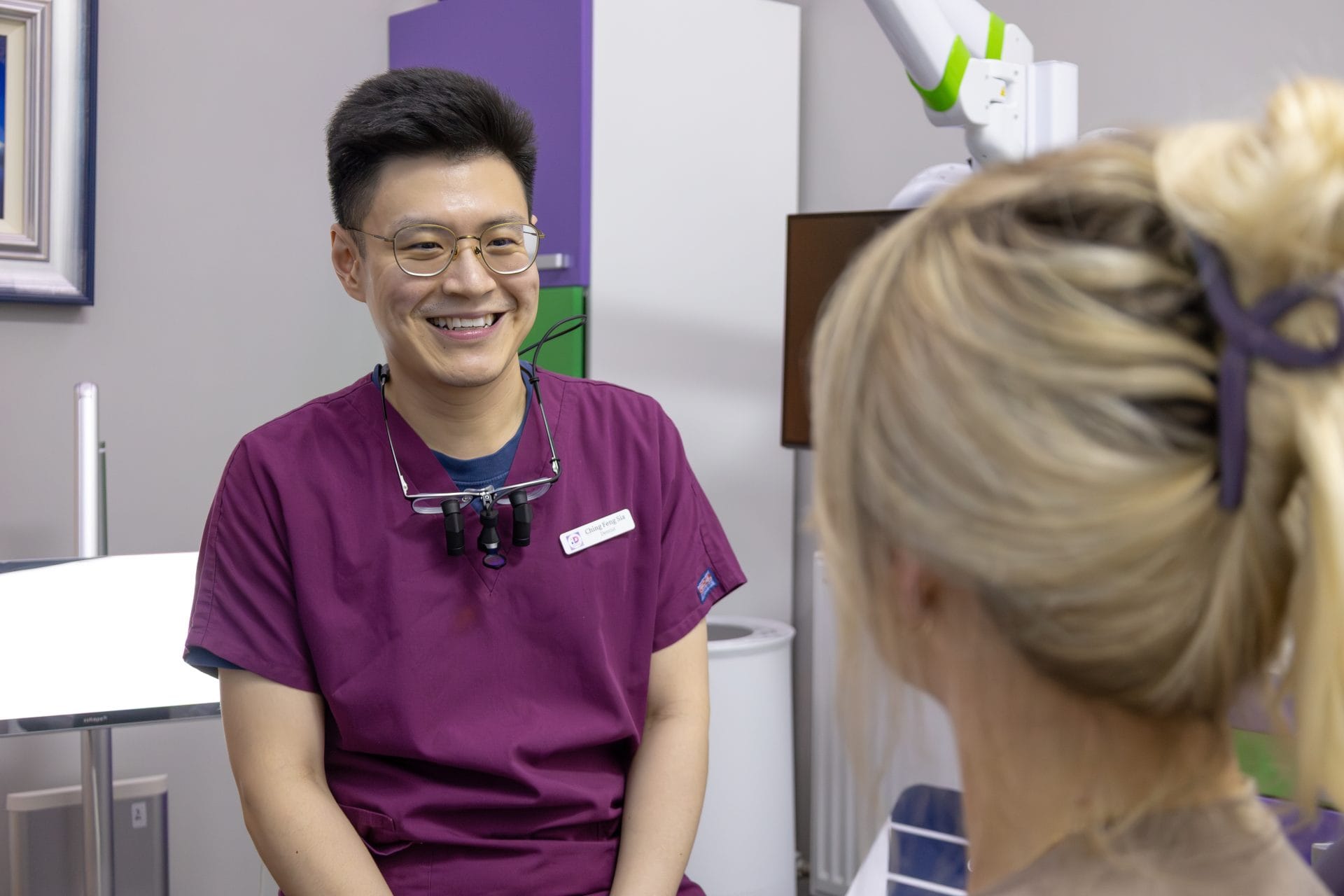
First, we review your medical and dental history, assess your current fillings, and talk through your goals and concerns.

Step 2: Treatment Planning
You’ll then receive a custom plan with recommended materials, the number of appointments, and associated costs. If you have several fillings, we usually plan the work in phases over a few visits. No pressure, no surprises.
Step 3: Safe Mercury Filling Removal with the SMART Protocol
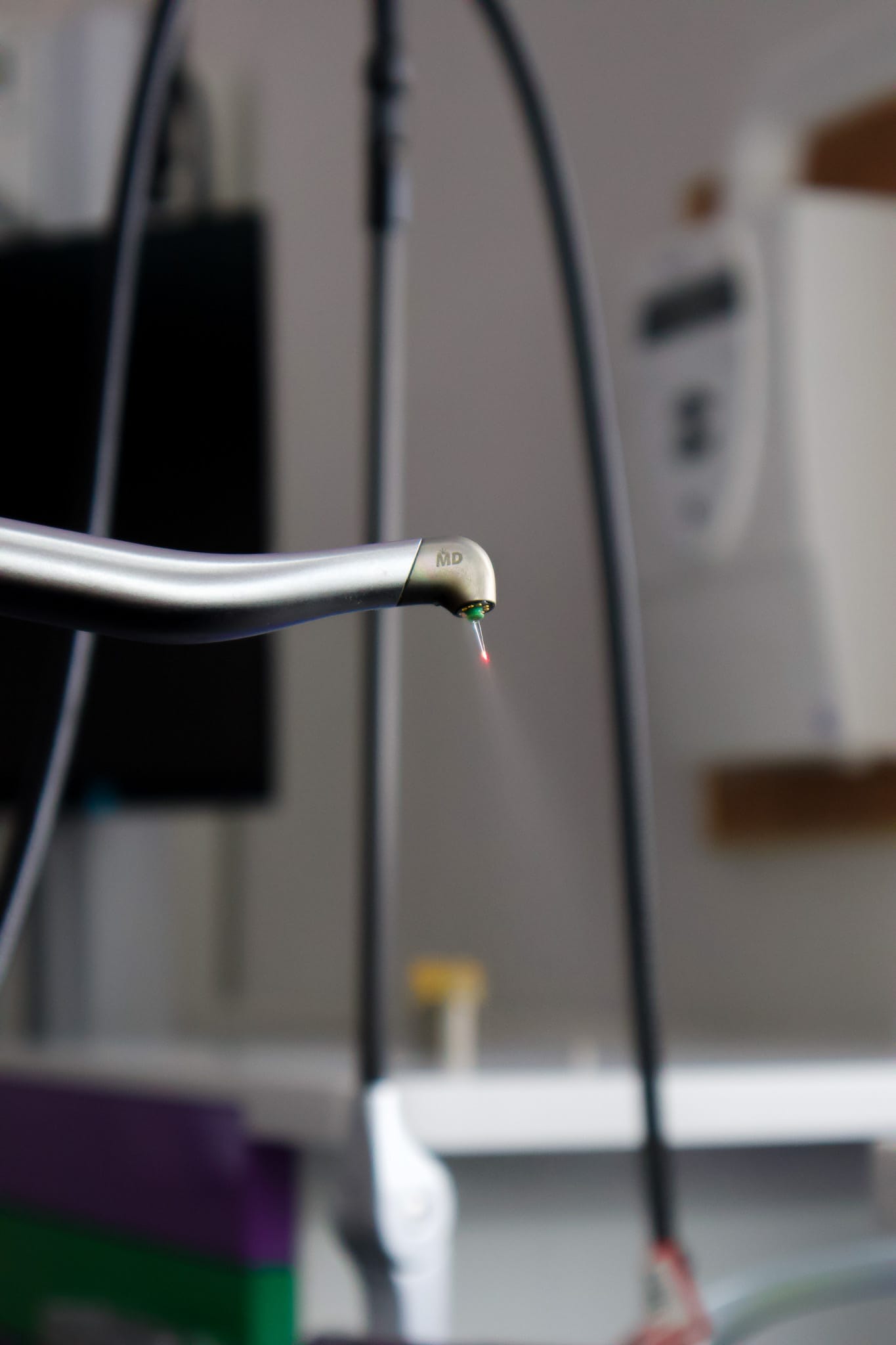
Next, we isolate and remove your existing amalgam fillings using equipment and methods designed to minimise exposure.
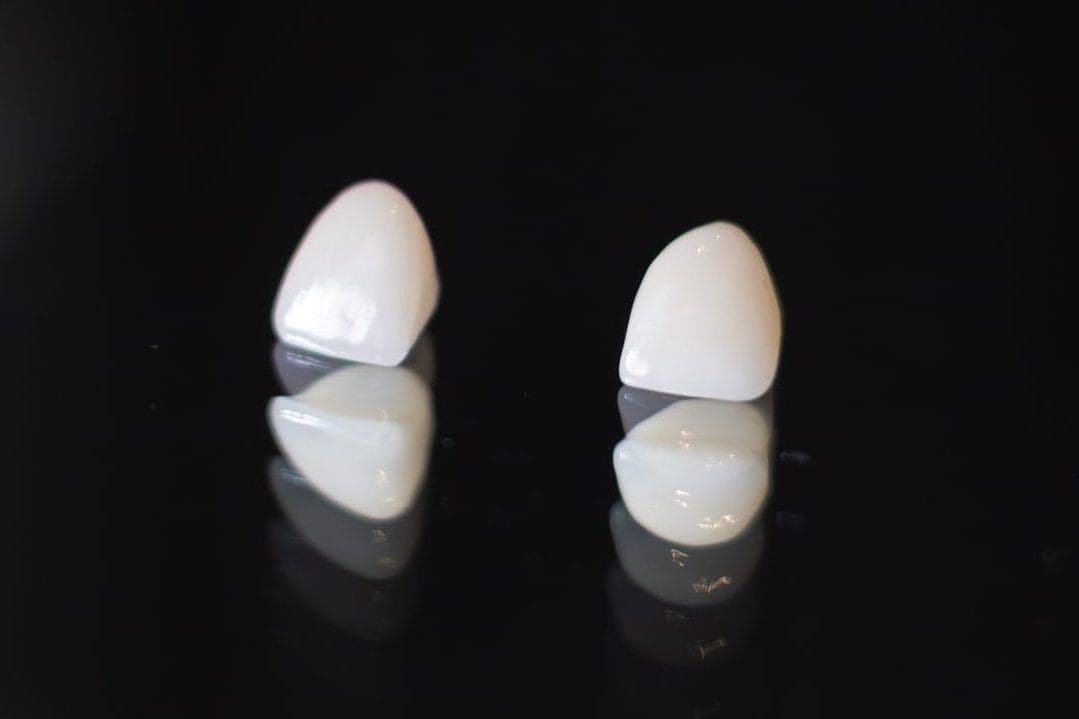
Step 4: Natural Restoration
After that, we carefully restore your tooth using composite or ceramic, matched to your natural colour and designed to feel seamless.

Step 5: Aftercare and Support
Finally, we guide you on how to care for your new restoration and monitor its long-term success through regular check-ups.
Why Integrated Dentalcare for Mercury Filling Removal?
Safe Mercury Removal Techniques
Minimal exposure. Maximum peace of mind.
High-Quality Tooth-Coloured Materials
Results that look and feel natural, without compromise.
Personalised Approach for Each Patient
No blanket solutions. Instead, we plan based on your individual needs.
Fully Private, Calm Practice
A comfortable, judgment-free space focused entirely on you.
Holistic-Aware, Evidence-Led Care
We listen to your reasons and then explain what the evidence says.
Patient Stories That Speak for Themselves
I recently had a number of my old amalgam fillings safely removed by Dr Neeraj Puri. He is an exemplary dentist who sets a very high standard indeed. He makes your stay during your appointment as comfortable as possible. I would have no hesitation in recommending this dentist for safe amalgam removal and tooth restoration. Thank you for your time and dedication.
Jennifer M.
I chose integrated dentalcare to get my amalgam fillings removed safely. My experience with this dental practise was very positive. The environment is beautiful and pleasant. Everybody is very friendly and supportive. My dentist Neeraj Puri was excellent. He was considerate, professional and very nice as a person. He is very caring and has a lot of integrity. I can only recommend this dental practice.
Britta S.
I chose Integrated Dentalcare because I wanted a dentist who specialised in mercury amalgam removal. After my initial x-ray and consultation it was diagnosed that my teeth required extensive work. This included some extractions and bridge work as well as the mercury amalgam removal. In total I had twelve appointments over the last year and the work is now completed. I am delighted with the results and my dentist Neeraj and his team did a great job . The practise is very relaxing and the staff are all very friendly. My teeth now feel great and I know I am in good hands going forward. I live in Dundee but am more than happy to make the extra effort travel wise to receive this level of dental care.
John R.
With concerns that mercury/amalgam fillings were causing some health issues, I was delighted to come across Integrated Dentalcare. The staff were friendly and welcoming, and Neeraj sat me down for a relaxed, informal chat to go over having my fillings removed, and you can tell this is somewhere that genuinely cares about their patients. I felt I was in very safe hands from the outset, and relaxed and confident during the procedure. With the use of the latest in technology, the patient can see what is going on. They removed all the fillings and meticulously restored my teeth. I am happy to say my gums and mouth now feel fantastic, and have received many compliments on my now white teeth. The hygienist has also been great, and patiently educates you on taking preventative care on your own. I would highly recommend this practice, 5/5
Rich E.
It would be fair to say I am not a fan of the visiting at the best of times but I was really dreading my first visit to Integrated dental services. The reason being I knew I wasn’t going for a simple check up or a few fillings but instead I was going to have my amalgam fillings replaced. Mercury toxicity from my fillings had made me very sick (that’s another story) and Integrated dental services had been recommended to me as being highly experienced in the safe removal of amalgam fillings. My first visit turned out to be a breath of fresh air. Neeraj was very friendly, highly approachable and (in a comfortable room away from a dentist chair) we had a comprehensive conversation about my general health as well as oral health and Neeraj answered my many questions about amalgam filling removal. So after winning my confidence I pressed ahead with a treatment plan. Now don’t get me wrong I wouldn’t go as far as to call my multiple appointments fun (it’s still the dentist after all) but what I will say is that I was really looked after. Neeraj and the team did everything they could to make me feel comfortable. The appointments were fairly long but that is because this is not the production line dentistry I had experienced in the past. Lots of time was taken during each procedure and you can see there is a real passion for perfection going on here. The evidence of this can be seen when I look into my mouth and see no evidence of anything that looks like a filing. Nice work!
Brian K.
FAQs: Mercury Filling Removal and Replacing Silver Fillings
Replacing Silver Fillings with White Ones
Can I replace my silver fillings with white ones?
Yes. In most cases, we can replace silver (amalgam) fillings with tooth-coloured composite fillings or ceramic. However, we check each tooth first, because a large or cracked filling may need an inlay, onlay or crown instead.
Can amalgam fillings be replaced with composite?
Yes. Composite is a tooth-coloured material that bonds to your tooth. For larger fillings, your dentist may suggest a ceramic inlay or onlay instead, and they will explain why.
What happens during mercury filling removal?
We follow the SMART protocol. First, we isolate the tooth with a rubber dam. Then we use high-volume suction and cool water spray while we cut the filling out in chunks. Finally, we restore the tooth with a tooth-coloured filling.
Will my tooth look different afterwards?
Your new filling is matched to the colour of your tooth, so the dark metal is no longer visible. Individual results vary.
Mercury Filling Removal: Your Other Questions
Is amalgam removal safe?
Yes, when performed using proper protocols. For example, we use specialised suction, rubber dams, and slow-speed techniques to minimise mercury exposure throughout.
Will it hurt?
We use local anaesthetics to ensure comfort. For those who are nervous, we can also discuss sedation options to help you feel more relaxed.
What will the new filling be made of?
We use composite resin or ceramic. Both are tooth-coloured, biocompatible, and designed to last.
Do I need to replace all my amalgam fillings?
That’s entirely up to you. First, we’ll assess each filling’s condition. Then we discuss the benefits and risks of replacing one or several based on your priorities.
How many appointments will I need?
It depends on how many fillings you would like to replace. If you have several, we usually spread the work over a few visits rather than removing them all at once.
Will my new fillings last as long?
Yes, when cared for properly. Composite and ceramic fillings can last many years, provided that you keep up good oral hygiene and regular dental check-ups.
What if my new filling feels high afterwards?
A new filling can feel slightly raised for a few days. However, if it still feels high after that, your dentist can adjust it at a quick appointment. Read our guide to a filling that feels too high.
Watch: Mercury Filling Removal and Replacement
How we approach replacing old amalgam (mercury) fillings at Integrated Dentalcare. You can also find more in our YouTube library.
Old Metal Out. Confidence In. Smile Restored.
Whether you’re making the change for health, aesthetics, or peace of mind, we’re here to guide you safely through it.
This isn’t about fear. Instead, it’s about choice, trust, and modern materials that match the life you live now.
Alternatively, you can call us directly on 0131 225 9093.
Dentist Dr Neeraj Puri (GDC 71646) carries out amalgam removal at our practice, and all our dentists are registered with the General Dental Council. Treatment is subject to assessment and may not be suitable for everyone. Individual results vary.