
By Dr Neeraj Puri, BDS (Glasgow 1996) Integrated Dentalcare, Edinburgh Published October 2026 6-minute read.
If you’ve been putting off replacing a missing tooth because of the cost, you’re far from alone. Most people we see have been thinking about it for months, sometimes years. Many have collected a few quotes and are waiting for the right price or the right moment.
This article is for you. Not to pressure you, but to show you the full picture: what waiting actually costs, why the cheapest quote is rarely the cheapest outcome, and how to compare your options properly.
There’s no such thing as a cheap implant. There’s just an implant where the cost shows up later.
Doing nothing is not free
It’s natural to think that delaying treatment costs nothing, and that the gap will simply wait for you. It won’t.
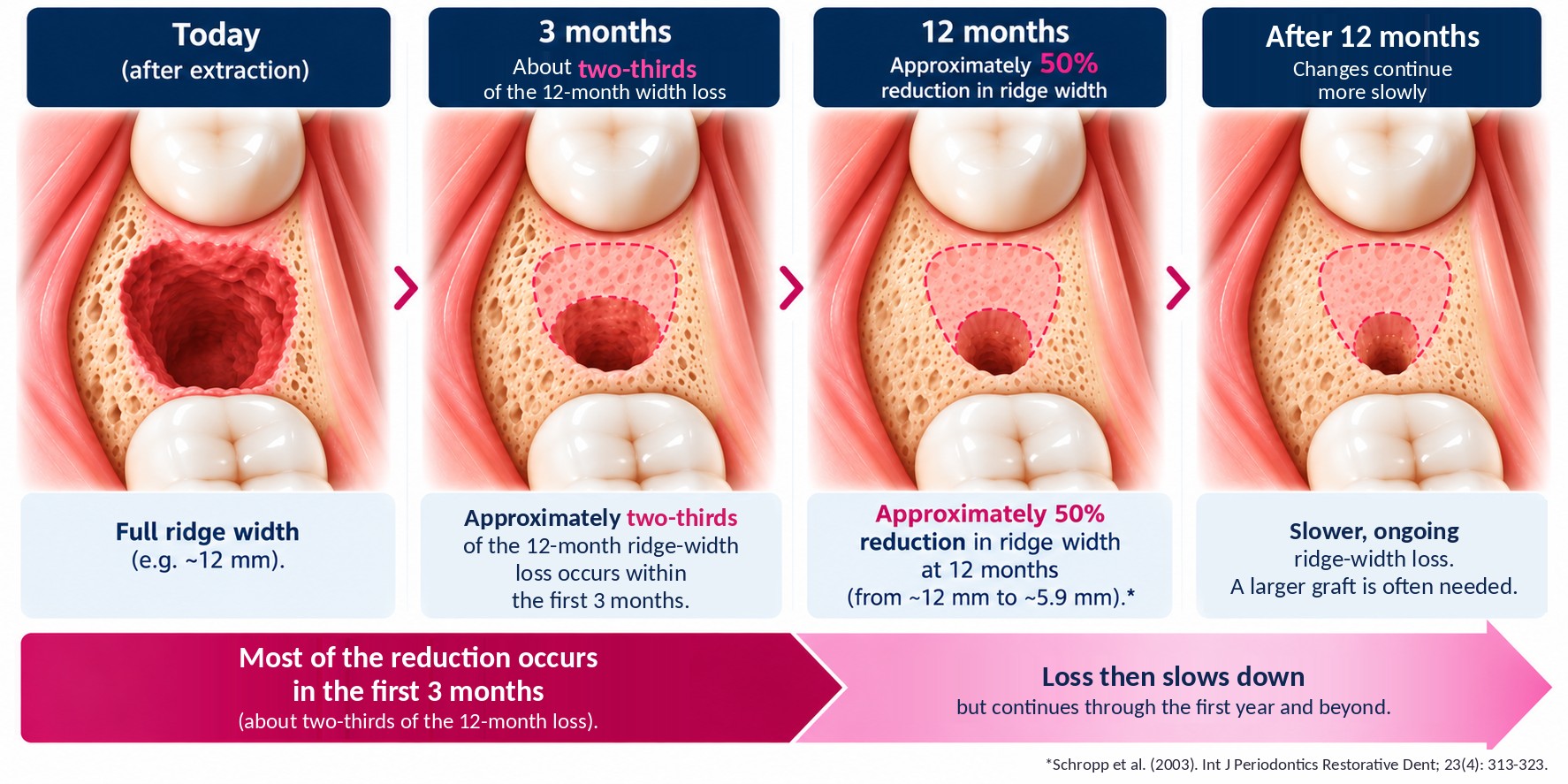
Once a tooth is lost, the bone that held it starts to shrink. A well-known clinical study by Schropp and colleagues found that around half of the bone width is lost within the first 12 months after a tooth is removed, and about two-thirds of that loss happens in the first three months.
Why does that matter? An implant needs enough bone to sit in. If a tooth is removed and the socket is grafted at the same time, much of that bone can be preserved. What could be a straightforward implant today can, a year or two later, need a larger bone graft first. That means an extra procedure, extra healing time (often several months) and extra cost.
Better still, if the implant is placed at the same time as the tooth is removed, your body’s natural healing response in the fresh socket works around the implant and helps preserve the gum. That can mean fewer procedures and can shorten treatment by 3 to 6 months.
Bone loss is not the only change. Neighbouring teeth can drift and tilt into the gap, the opposite tooth can over-erupt, and your bite can shift. Each of these can make the eventual treatment more involved.
👉 Watch: What happens when teeth are lost
Waiting doesn’t keep your options open. It tends to close them.
What waiting can cost you, in real numbers
Here’s a simple comparison based on our current fees for a single tooth.
| Treat now | Wait 1 to 2 years | |
| Implant (Swiss titanium system) | £2,356 | £2,356 |
| Crown | £1,100 | £1,100 |
| Bone graft | Often not needed, or a simple socket graft (£774) at the time of extraction | A larger graft to rebuild lost bone: from £1,200 |
| Extra healing time | None | Often 4 to 6 months |
| Extra surgical visit | No | Yes |
| Total | £3,456 to £4,230 | From £4,656 |
Prices correct as of October 2026. Every case is different and your exact fee is confirmed after your assessment.
In other words, putting it off can add £1,200 or more to the bill, plus the extra healing, the extra appointment and the time spent living with a gap. A larger graft costs more because it is more complex: it needs additional materials and more advanced surgical skill to rebuild bone that has already been lost.
Why the cheapest quote is rarely the cheapest outcome
Two quotes for “an implant” can describe very different treatments: different materials, different techniques, different levels of planning and different levels of surgeon experience, with very different long-term prospects.
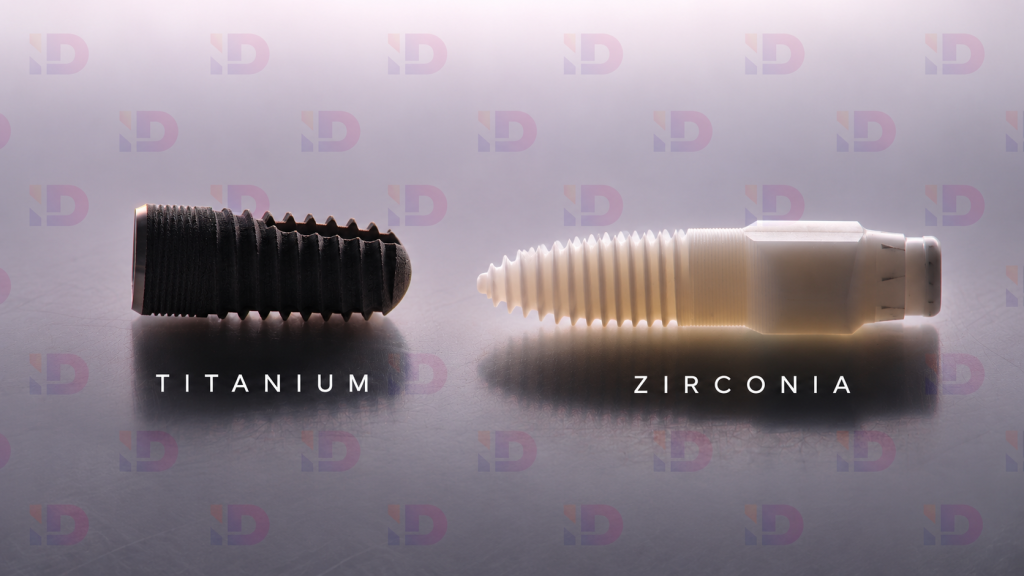
We use premium, Swiss-manufactured implant systems. That’s a deliberate choice. These systems are backed by decades of published clinical research and made to extremely tight tolerances, with surfaces engineered to bond with bone. An implant isn’t just hardware sitting in your jaw. It’s a titanium or zirconia structure that fuses with living bone and stays part of your body for the rest of your life.
Lower-cost “copycat” systems can copy the basic shape of a premium implant without the research behind its surface, its long-term data or its manufacturing precision. Those differences don’t show up on a quote. They show up in outcomes, and they show up years later if parts ever need replacing and the system is hard to source.
Precision you can measure, not just take on trust
Every practice will tell you its dentist is experienced. It’s hard for you to check. What we’d rather give you is something you can verify: measurable precision.
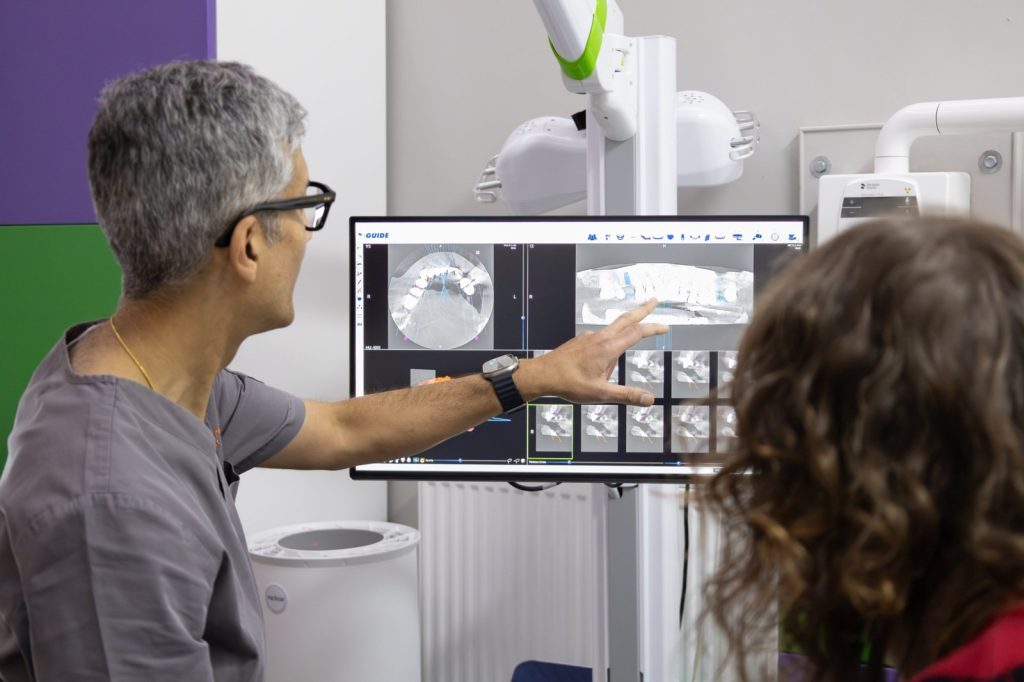
We place implants using X-Guide, a dynamic navigation system that works on a similar principle to the guidance used when spacecraft dock with the International Space Station. It guides the placement in real time, continuously tracking position as the procedure happens. That live guidance reduces positional error and adds a margin of safety, particularly near nerves, sinuses and other delicate anatomy.
X-Guide doesn’t replace skill and experience. It adds a measurable layer of accuracy on top of over 20 years of placing implants, case by case.
The three things that decide whether an implant lasts
- Position: exactly where and how the implant is placed. This is where guided navigation makes a measurable difference.
- Material: the quality and biocompatibility of the implant system itself. This is where research-backed components earn their cost.
- Judgement: the experience to plan not just the implant but the whole mouth around it, including your bite and how everything works together, rather than treating the gap in isolation.
Cut a corner on any one of these to save money upfront and it’s often the reason an implant needs revisiting a few years later.
Thinking about treatment abroad?
Many of our patients have looked at implants in Turkey or elsewhere in Europe, and it’s a completely understandable thing to consider. The price difference can look significant, and there are skilled clinicians all over the world.
The important thing to remember is that an implant is a surgical procedure, not a purchase. When it’s planned and placed well, it can serve you for decades. When it isn’t, the damage to bone and gum can be harder and more costly to put right than the original problem, often needing more advanced procedures to fix.
If you’re weighing up treatment abroad, these practical questions are worth asking:
- How many trips will I need? Implants usually need several months of healing between surgery and the final crown. Factor flights, hotels and time off work into the true cost.
- Who looks after me when I’m home? If something needs attention after you return, who will see you, and how quickly?
- Which implant system is being used? Ask for the brand and request the implant record (often called an implant passport). Some systems are difficult for UK dentists to source parts for.
- What happens if it needs revisiting? Ask what the guarantee covers, and whether it requires you to travel back.
Our view is simple. You have a choice, and the results tend to follow the choices you make. If you’re going to invest in replacing a tooth, why not do it properly the first time, with an experienced implant dentist, real-time guided placement and a team that is a short journey away for every review?
What a properly done implant costs at Integrated Dentalcare
| Single implant and crown: £3,456 Implant £2,356 + crown £1,100 0% finance available on treatment over £1,000, spread over 6 to 12 months. Over 12 months, that’s £288 a month, with no interest. Subject to status. Put another way: if your implant lasts 20 years, that’s less than 50p a day. Prices correct as of October 2026. |
6 questions to ask before you accept any implant quote
Whichever clinic you choose, these questions turn a quote from a single number into a real comparison:
- Which implant system will be used, and where is it manufactured?
- Will placement be guided or freehand? If guided, by what technology?
- Does the quote include everything: assessment, 3D scan, implant, abutment, crown and reviews?
- How many years has the dentist been placing implants, and how much of their work is focused on implants?
- What guarantee is offered, and what does it actually cover?
- If something needs attention in future, who will see me and how quickly?
Tip: screenshot or print this list and take it with you to every consultation, including ours.
Your next step: find out what waiting is costing you
If you’ve been putting this off, the most useful thing you can do is find out where you stand today, before more bone is lost.
Our Implant Consultation & Whole-Mouth Overview is a 30-minute appointment with Dr Puri to find out whether an implant is right for you, look at the mouth around the gap, and talk through your options and costs. The £119 fee is credited towards your implant treatment if you book your planning appointment within two weeks. There’s no pressure to go ahead. You’ll simply know where you stand and what it would take to fix it properly.
Prefer to start from home? Aimee, our implant co-ordinator, offers a free video consultation on Microsoft Teams.
👉 Call 0131 225 9093 | Email Sofia (your treatment co-ordinator)
Frequently asked questions
How much does a dental implant cost in Edinburgh?
At Integrated Dentalcare, a single implant and crown costs £3,456 (implant £2,356, crown £1,100), with 0% finance available over 6 to 12 months. Prices correct as of October 2026. Costs vary between clinics depending on the implant system, the technology used and what is included in the quote.
Does it cost more to wait before getting a dental implant?
Often, yes. Around half of the bone width can be lost in the first year after a tooth is removed. That can turn a straightforward implant into one that needs a larger bone graft first. At Integrated Dentalcare, a simple socket graft at the time of extraction is £774, while a larger graft later on starts from £1,200, as well as adding an extra procedure and several months of healing.
What happens if I don’t replace a missing tooth?
The bone where the tooth was shrinks, neighbouring teeth can drift into the gap, the opposite tooth can over-erupt and your bite can change. These changes can make future treatment more complex.
Why are some dental implants cheaper than others?
Price differences usually reflect the implant system used, the research and manufacturing quality behind it, whether placement is guided by navigation technology or done freehand, and what aftercare is included.
Is it worth getting dental implants abroad?
It can look cheaper upfront, but implants are a surgical procedure that usually needs several visits over months. Factor in travel, time off work, aftercare once you’re home and what happens if anything needs revisiting. If treatment isn’t done well, correcting it can need more advanced and costly procedures.
Can I spread the cost of a dental implant?
Yes. At Integrated Dentalcare, treatment over £1,000 is eligible for 0% finance over 6 to 12 months, subject to status.
What is X-Guide?
X-Guide is a dynamic navigation system that guides implant placement in real time, continuously tracking position during the procedure to reduce error and improve safety near nerves and sinuses.
What determines how long a dental implant lasts?
Three main factors: precise positioning, the quality of the implant system and the dentist’s clinical judgement in planning around the whole mouth. Good home care and regular reviews matter too.
References
Schropp L, Wenzel A, Kostopoulos L, Karring T. Bone healing and soft tissue contour changes following single-tooth extraction: a clinical and radiographic 12-month prospective study. Int J Periodontics Restorative Dent. 2003;23(4):313-323. https://pubmed.ncbi.nlm.nih.gov/12956475/

About the author: Dr Neeraj Puri qualified from the University of Glasgow in 1996 and has over 20 years of focused experience in implant dentistry, from single teeth to full-arch restorations. He is Clinical Director of Integrated Dentalcare and Inverleith Dentalcare in Edinburgh.