

Jaw pain after dental work is common, and in most cases it is nothing to worry about. It usually eases within a few days as your muscles recover. This guide explains why your jaw can ache after a filling, an extraction or a long appointment, what helps at home, and when to contact your dentist.
Why Does Your Jaw Hurt After the Dentist?
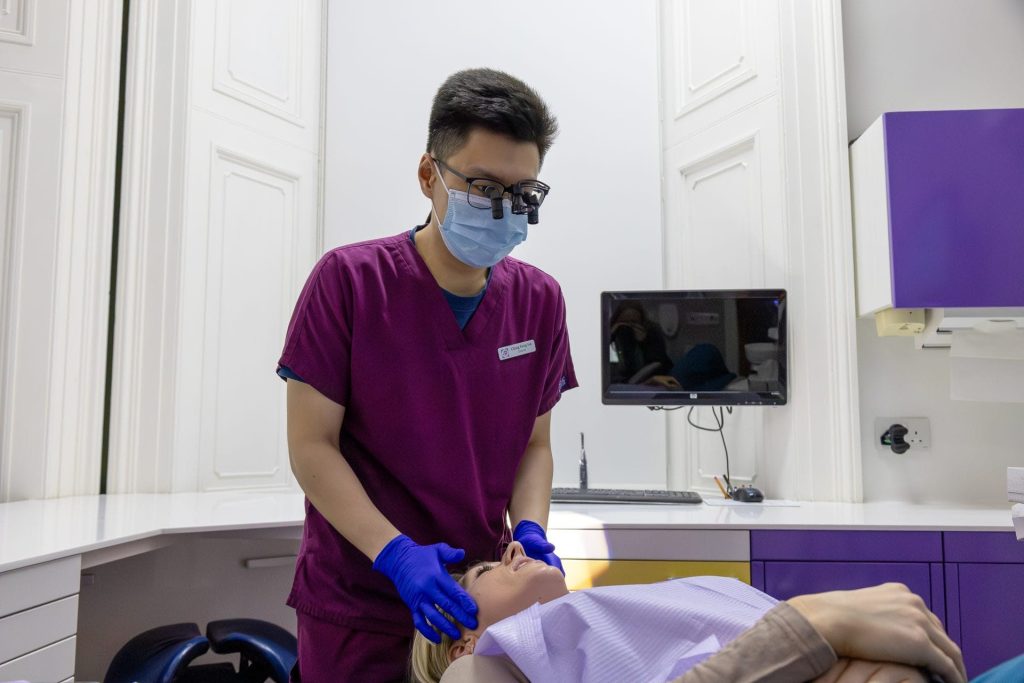
Your jaw is a joint worked by strong muscles. During treatment, it is held open for longer than usual, so it is easy for it to feel tired or sore afterwards. The most common causes are:
- Keeping your mouth open for a long time. Long appointments can strain the jaw muscles, much like any muscle after hard use.
- The anaesthetic injection. The spot where you were numbed can feel bruised or stiff for a day or two.
- A change in your bite. If a new filling or crown sits slightly high, your jaw works harder every time you bite.
- Clenching or grinding. Some people tense their jaw during treatment or at night, which adds to the strain.
- An existing jaw joint problem. If you already have a temporomandibular disorder (TMD), a long appointment can cause a flare-up.
Jaw Pain After a Filling
A sore jaw after a filling is usually muscle tiredness or tenderness where the injection went in. Both tend to settle within a few days.
However, if your teeth don’t meet the way they did before, the filling may be slightly high. That extra pressure can make your jaw and tooth ache, and it rarely settles without help. A quick adjustment usually fixes it. Read more in our guide to a filling or crown that feels high.
Jaw Pain After a Tooth Extraction
After an extraction, including wisdom teeth, some jaw ache and stiffness are normal. Your jaw may also feel tight, and it can be hard to open your mouth fully for a few days.
Pain should slowly improve each day. If it gets worse two to four days after the extraction, contact your dentist. This can be a sign of dry socket, where the blood clot in the socket has come away. It is very treatable, so there is no need to wait it out.
How Long Does Jaw Pain After Dental Work Last?
For most people, it eases within a few days. After a long appointment or an extraction, it can take up to a week or two to settle completely.
As a rough guide, it should be improving a little each day. If it is still there after two weeks, or if it is getting worse rather than better, book a check so your dentist can find the cause.
How to Relieve Jaw Pain After Dental Work
Most jaw pain after dental work responds well to simple care at home:
- Rest your jaw. Avoid chewing gum, wide yawns and big bites for a few days.
- Eat soft foods. Soup, scrambled eggs, pasta, yoghurt and mashed potato are all easy on your jaw.
- Use cold first, then warmth. A cold pack wrapped in a cloth can help in the first day or two. After that, a warm compress can relax tight muscles.
- Move gently. Slowly opening and closing your mouth a few times can ease stiffness, but stop if it hurts.
- Take pain relief if you need it. Over-the-counter pain relief can help. Always follow the instructions on the pack, and ask a pharmacist if you are unsure which is suitable for you.
When to Contact Your Dentist
Contact your dentist if:
- the pain lasts longer than two weeks or is getting worse
- your bite feels different or a new filling feels high
- you still can’t open your mouth properly after a few days
- your jaw clicks, locks or catches when you open it
- pain after an extraction gets worse instead of better
Get urgent help if you have swelling that is spreading to your eye or neck, a high temperature, or difficulty swallowing or breathing. In Scotland, call NHS 24 on 111. If you are struggling to breathe, call 999.
Questions About Jaw Pain After Dental Work
Is it normal for my jaw to hurt after the dentist?
Yes. A tired or achy jaw is common after treatment, especially after a long appointment. It usually improves within a few days.
Should I use heat or ice?
Use cold for the first day or two, as it can help with swelling. After that, warmth is often more soothing for tight muscles.
Why do my ear and jaw hurt after dental work?
Your jaw joint sits just in front of your ear. So when the joint or the muscles around it are sore, you can feel it in your ear too. If it lasts more than a week or two, ask your dentist to check it.
Can dental work cause jaw joint problems?
A long appointment can strain the jaw and trigger a flare-up, especially if you already have a jaw joint problem. In most cases, it settles with rest and simple care.
Can I stop it happening next time?
Tell your dentist if your jaw tends to get sore. They can give you short breaks, use a small rest to support your jaw, or split a long treatment into shorter visits.
Talk to Us
If your jaw is still sore, or you are worried about your bite, we can check it for you. We will look for the cause and explain your options.
Need a check? Book an appointment or call 0131 225 9093. If you are in pain, see our emergency dentist page. We are a fully private dental practice at 1 Manor Place, Edinburgh.
This guide is general information, not a diagnosis. If you are unsure, contact your dentist.
Reviewed by Dr Neeraj Puri, a dentist (GDC 71646) who qualified from the University of Glasgow (UK) in 1996.