We Are Accepting New Patients  -  Proactive, Personalised Dentistry  -  Implants & Mercury-Free Care in Edinburgh

Category: Dental Implants

Single tooth to full arch, guided surgery (X-Guide), immediate placement, aftercare, gentle tooth removal using PRF and lasers. Photobiomodulation.

  • “I Searched All of Scotland for a Metal-Free Implant”

    “I Searched All of Scotland for a Metal-Free Implant”

    By Dr Neeraj Puri, BDS (Glasgow 1996) Integrated Dentalcare, Edinburgh Published October 2026 7-minute read

    Almost every patient who comes to me for a ceramic implant tells me a version of the same story. They knew what they wanted. They just couldn’t find anyone in Scotland who offered it.

    They come from the islands and the north of Scotland, from communities like Findhorn, and from Northumberland, Yorkshire, Huddersfield and even the south of England. Most found us through a Google search that finally landed, or, for some, through the IAOMT’s directory of biological dentists, where we were previously listed. Almost all say the same thing: “I wish I’d known about you sooner.”

    Why people go looking for a metal-free implant

    The patients I see are rarely looking for “an implant”. They’re looking for a dentist who thinks about the whole person, not just the gap.

    Many describe what they want as holistic or biological dentistry. They want to keep metals out of their body wherever possible. Some have had allergy testing, such as a MELISA test, which suggested a sensitivity to certain metals. Others have read about metal particles and byproducts and would rather not take that risk. Others are already working with a health practitioner and want their dental treatment to fit with that wider approach.

    Some patients have concerns about root-filled (“dead”) teeth and how they may affect their wider health, and choose to have them removed. When that tooth is replaced, they don’t want metal going into the jawbone in its place.

    Others worry about mixing metals. A conventional implant is rarely just titanium: the screw, the connecting part and the crown can each be a different alloy. Some patients are concerned that different metals bathed in saliva can create small electrical currents, a “battery effect”, and want to avoid that altogether.

    I don’t think anyone should have to justify that choice. My job is to explain the options honestly, so you can make the decision that sits right with you.

    What they want is someone with real experience who understands why this matters to them, not someone who dismisses it.

    Why it’s so hard to find

    There are two reasons.

    First, very few dentists in Scotland place ceramic implants. They need different planning, different surgical handling and different components from titanium. Many practices simply don’t offer them.

    Second, even where the treatment exists, it’s hard to find online. Search for ceramic or zirconia implants in Edinburgh and you’ll mostly see directories and London clinics. Our own website hasn’t said enough about it either. That’s changing, starting here.

    What we do at Integrated Dentalcare
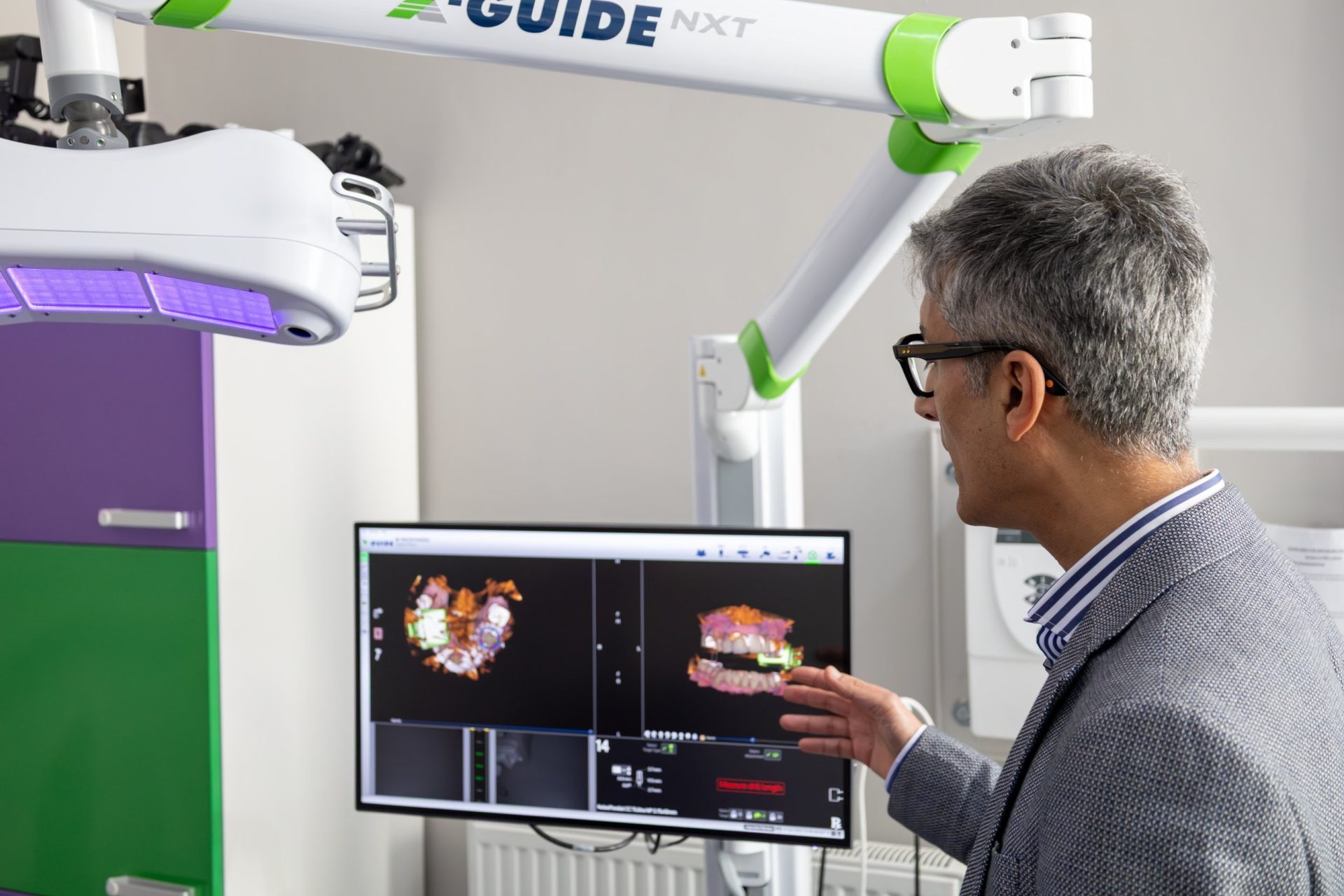
    Dr Neeraj Puri reviewing a 3D digital implant plan on the X-Guide NXT navigation screen at Integrated Dentalcare, Edinburgh

    I’ve placed implants for around 20 years and have been placing zirconia implants since 2010. Implant dentistry is the focus of my clinical work. My main ceramic implant system is Swiss Dental Solutions (SDS), and I also use Straumann’s ceramic implant where it suits the case.

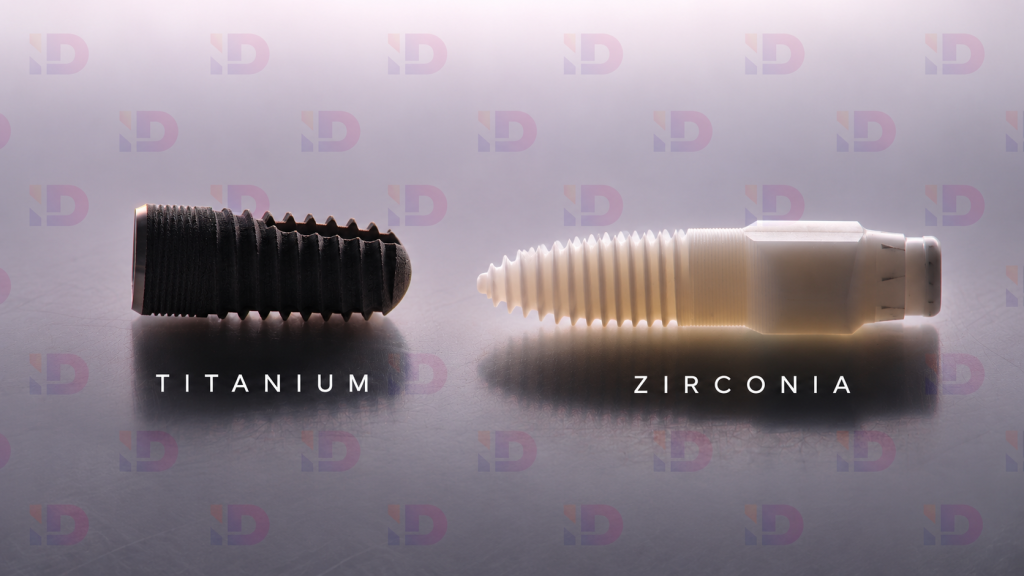
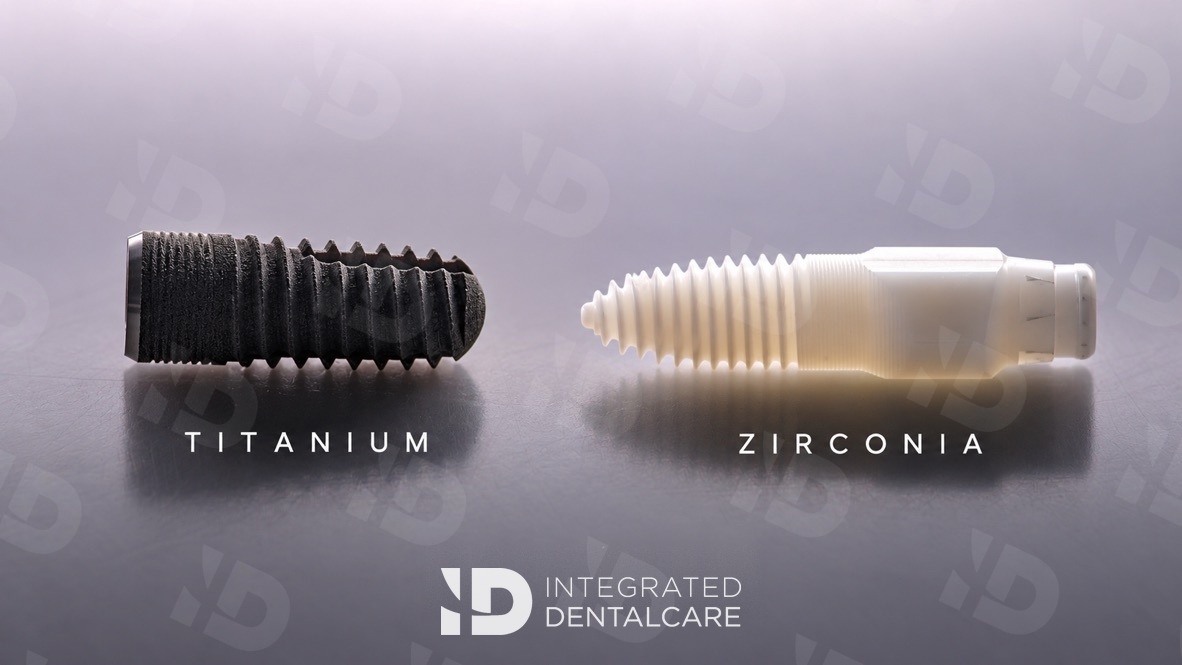
    Most of the ceramic implants I place are one-piece designs. The implant and the part that holds the crown are a single piece of zirconia, so there is no internal screw and no join between different materials.

    A few things patients tell me matter to them:

    • Metal-free from root to crown. A zirconia implant with a ceramic crown, with no metal in the mouth.
    • Clean components. The SDS ceramic implants carry the CleanImplant Foundation‘s Trusted Quality mark. To earn it, randomly sampled sterile-packed implants are examined under a scanning electron microscope in accredited laboratories, then peer reviewed. The Foundation has found contaminants on many implants straight out of the packet, so few systems qualify.
    • Metal-free from start to finish. The SDS concept uses only metal-free products during treatment, even the surgical drills are ceramic. That isn’t the case with every ceramic implant provider.
    • Keyhole, guided surgery. I plan with 3D scans and place implants using X-Guide navigation, often through a small opening rather than cutting back the gum. Navigation is included in the fee.
    • Natural healing support. We use PRF, made from your own blood, and laser therapy to support comfortable healing.
    • The whole mouth, not just the gap. As an experienced general dentist, I look at old fillings, root-filled teeth, gums and bite before planning the implant. Many of our patients also ask about safe amalgam removal.

    Fewer visits: tooth out and implant in, often the same day

    Many clinics remove a tooth, wait months for healing, then bring you back to place the implant. That means more procedures, more injections, more healing time and, if you live far away, more journeys.

    In most of our cases, I remove the tooth and place the implant in the same appointment:

    1. Planned in advance. I plan the implant digitally before you arrive, choosing the position where it will carry biting forces best.
    2. The site is cleaned with laser. Laser decontaminates the socket, and the light also supports the body’s own healing response.
    3. Your own healing factors. PRF, made from a small sample of your blood, is placed in the site to support natural healing.
    4. Guided placement. X-Guide navigation follows my plan to the exact coordinates through a small keyhole opening. Unlike a fixed surgical guide, it lets me adjust in real time if the bone is softer or shaped differently from what the scan showed, which is often only clear once the tooth is out.

    The result is one procedure instead of several, a single healing period, and your new tooth sooner. Some cases need other problems resolved first, and I’ll tell you at your consultation if that applies to you. Navigation is included in our fees, so you’re not paying extra for it.

    A real X-Guide navigated procedure at Integrated Dentalcare, in under a minute.
    See the whole process for yourself, from 3D scans and digital planning to guided placement.

    One patient’s experience

    Eilean Donan Castle near Skye in the Scottish Highlands, with snow-capped mountains and its stone bridge reflected in the loch

    A functional medicine practitioner travelled six hours from the very north of Scotland for a ceramic implant. She had spent a long time looking for someone in Scotland who could offer it.

    Afterwards, she told us she was so glad to have found us. The procedure was minimally invasive and comfortable, and her healing went smoothly. She particularly valued the natural approaches to healing, such as PRF and laser therapy, alongside the guided keyhole technique.

    Is a ceramic implant right for you?

    Not always, and I’ll tell you if it isn’t.

    Where ceramic implants shine is wherever each tooth can be replaced as an individual implant. That might be a single tooth, a short bridge across three teeth, or even six or seven teeth, as long as each can be restored on its own implant to look like a natural tooth emerging from the gum. Because the implant is white, there’s no grey metal showing through thin gum, and even if the gum recedes a little over the years, it won’t look unsightly. Research also suggests gum tissue tends to respond well to zirconia, with some studies finding less plaque build-up than around titanium (Shrivastava et al., 2024).
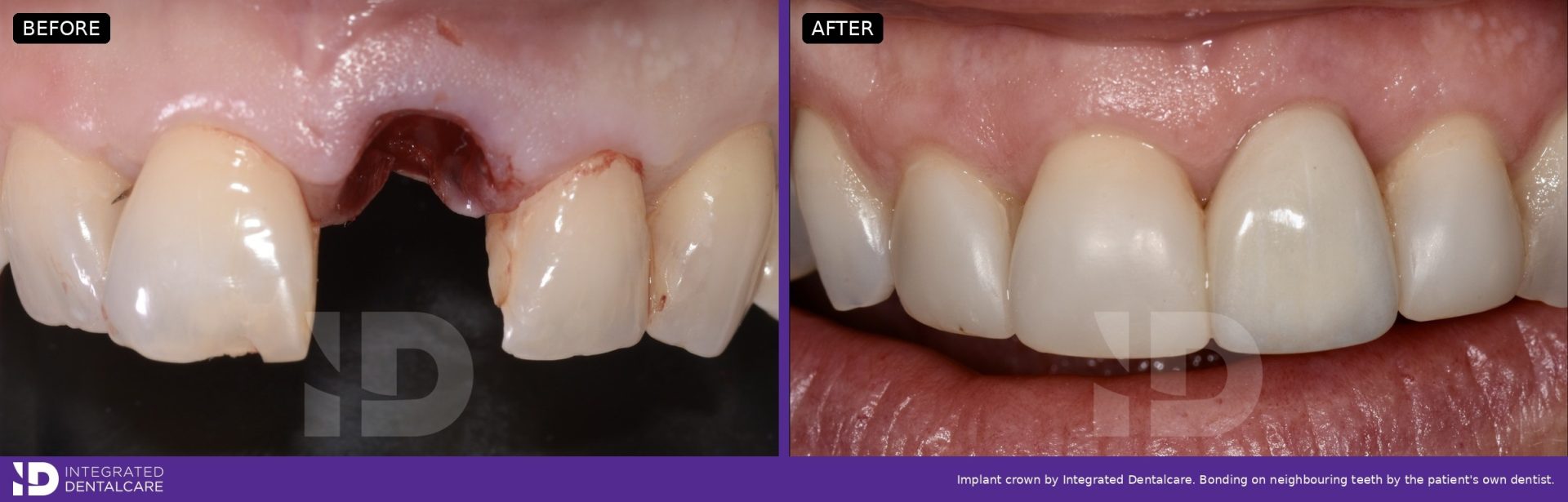
    Before and after: upper front tooth removed and replaced the same day with a Straumann ceramic implant, shown with the final crown four months later, Integrated Dentalcare, Edinburgh

    A front tooth removed and replaced with a ceramic implant in the same appointment, shown with the final crown four months later. Bonding on the neighbouring teeth was carried out by the patient’s own dentist.

    Where I’d usually recommend titanium:

    • Full-arch cases with a lot of bone loss. For a full mouth of fixed teeth where much of the bone has gone, these are often “end of the road” cases. Titanium systems give more flexibility, and the parts can be retrieved and adjusted if needed, which matters when you need the result to last for decades.
    • Heavy grinders and clenchers. Any implant can fracture under heavy forces, titanium included. The difference is retrievability: titanium systems are made of separate parts that can be adjusted or replaced, which gives more options if something goes wrong. If you grind heavily, especially under stress, titanium may be the safer choice.

    The exception is when only a few teeth are missing. Your remaining natural teeth help protect the implant, because they sense biting pressure and guide your bite. In those cases ceramic can still be an excellent option, even if you grind.

    The only way to know is a proper assessment. You can read more about the treatment on our zirconia dental implants page.

    If you’ve been searching too
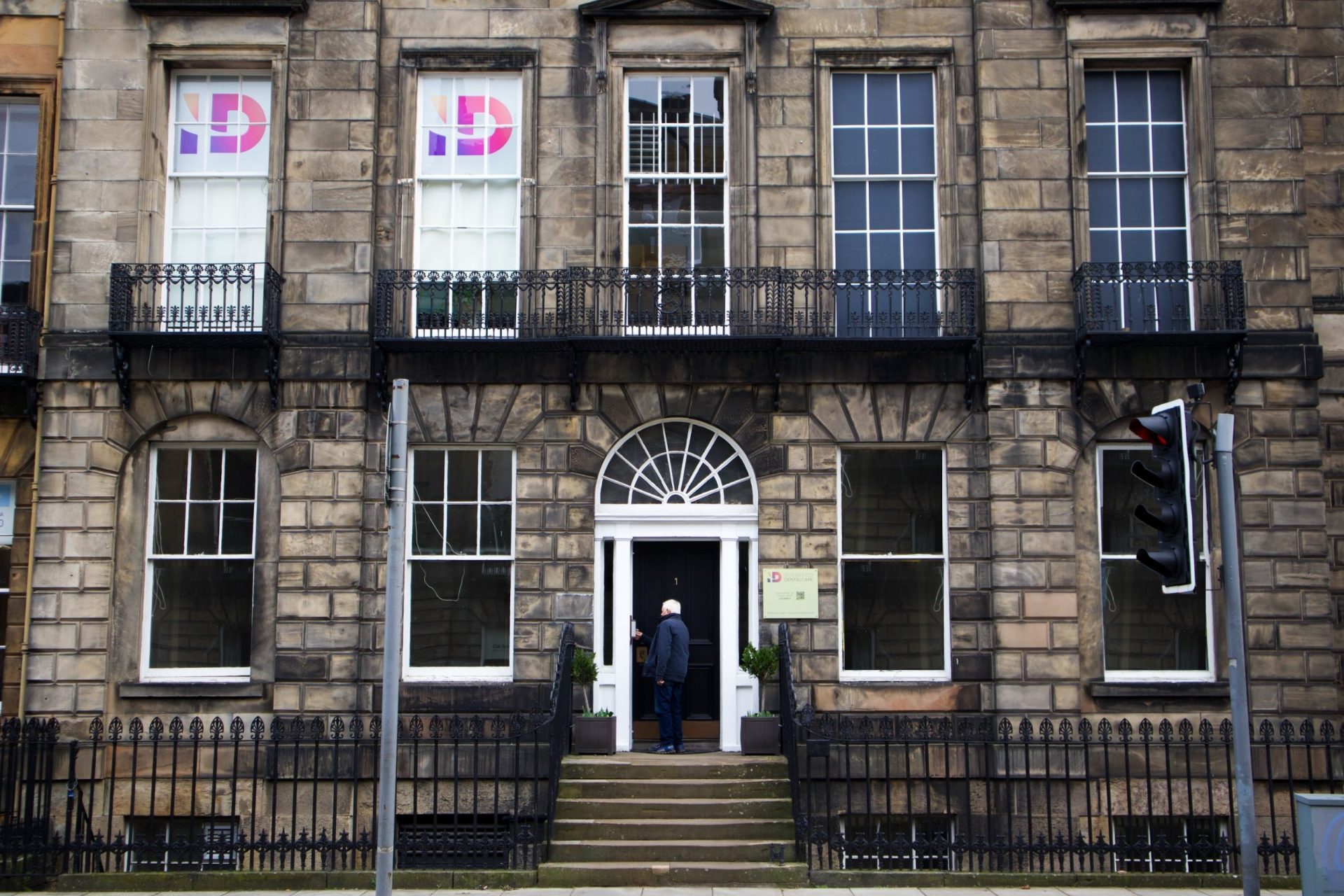
    Georgian entrance of Integrated Dentalcare on Manor Place, Edinburgh, with black front door and IDC logo in the upper windows

    You don’t need to travel to London or abroad. Our ceramic implant patients travel from across Scotland and the north of England, and we plan appointments to keep your trips to a minimum. Edinburgh has excellent transport links, and the practice is about seven minutes from a train station. Many patients stay overnight in Edinburgh, and we work closely with functional medicine practitioners very near the practice, so your visit can support your wider health too.

    If you live far away, you can start with a free video consultation on Microsoft Teams with Aimee, our implant coordinator and nurse, to ask your questions before deciding to make the journey.

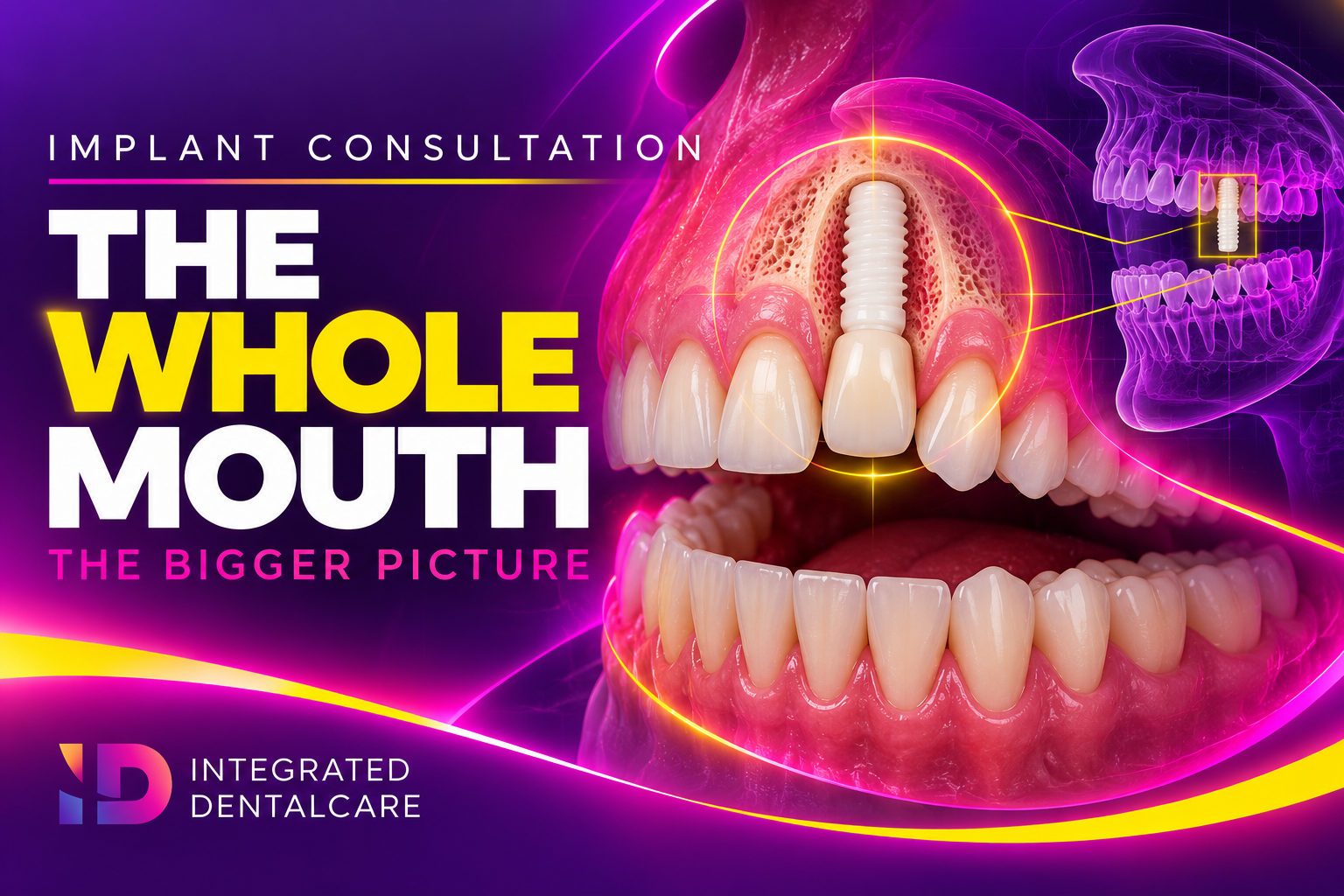
    The first step at the practice is our Implant Consultation & Whole-Mouth Overview. It’s a 30-minute appointment focused on the teeth that need replacing and how the rest of your mouth affects them. It isn’t a replacement for a check-up with your own dentist, so it won’t go into detail on things like small cavities or cracks unless they’re obvious. We look at your mouth from an engineering perspective: why the problem happened in the first place, and what else might become an issue, so you can avoid it happening again. We’ll also talk through titanium and ceramic options and answer your questions without pressure. The £119 fee is credited against your implant placement if you book your planning appointment within two weeks.

    Call us on 0131 225 9093 or email [email protected] to book.

    About the author: Dr Neeraj Puri qualified from the University of Glasgow in 1996 and has over 20 years of focused experience in implant dentistry, from single teeth to full-arch restorations. He has placed zirconia implants since 2010 and is Clinical Director of Integrated Dentalcare and Inverleith Dentalcare in Edinburgh.
  • Implant Consultation & Whole-Mouth Overview

    Implant Consultation & Whole-Mouth Overview

    By Dr Neeraj Puri, BDS (Glasgow 1996) Integrated Dentalcare, Edinburgh Published October 2026 7-minute read

    Almost every patient who comes to me for a ceramic implant tells me a version of the same story. They knew what they wanted. They just couldn’t find anyone in Scotland who offered it.

    They come from the islands and the north of Scotland, from communities like Findhorn, and from Northumberland, Yorkshire, Huddersfield and even the south of England. Most found us through a Google search that finally landed, or, for some, through the IAOMT’s directory of biological dentists, where we were previously listed. Almost all say the same thing: “I wish I’d known about you sooner.”

    Why people go looking for a metal-free implant

    The patients I see are rarely looking for “an implant”. They’re looking for a dentist who thinks about the whole person, not just the gap.

    Many describe what they want as holistic or biological dentistry. They want to keep metals out of their body wherever possible. Some have had allergy testing, such as a MELISA test, which suggested a sensitivity to certain metals. Others have read about metal particles and byproducts and would rather not take that risk. Others are already working with a health practitioner and want their dental treatment to fit with that wider approach.

    Some patients have concerns about root-filled (“dead”) teeth and how they may affect their wider health, and choose to have them removed. When that tooth is replaced, they don’t want metal going into the jawbone in its place.

    Others worry about mixing metals. A conventional implant is rarely just titanium: the screw, the connecting part and the crown can each be a different alloy. Some patients are concerned that different metals bathed in saliva can create small electrical currents, a “battery effect”, and want to avoid that altogether.

    I don’t think anyone should have to justify that choice. My job is to explain the options honestly, so you can make the decision that sits right with you.

    What they want is someone with real experience who understands why this matters to them, not someone who dismisses it.

    Why it’s so hard to find

    There are two reasons.

    First, very few dentists in Scotland place ceramic implants. They need different planning, different surgical handling and different components from titanium. Many practices simply don’t offer them.

    Second, even where the treatment exists, it’s hard to find online. Search for ceramic or zirconia implants in Edinburgh and you’ll mostly see directories and London clinics. Our own website hasn’t said enough about it either. That’s changing, starting here.

    What we do at Integrated Dentalcare

    Dr Neeraj Puri reviewing a 3D digital implant plan on the X-Guide NXT navigation screen at Integrated Dentalcare, Edinburgh

    I’ve placed implants for around 20 years and have been placing zirconia implants since 2010. Implant dentistry is the focus of my clinical work. My main ceramic implant system is Swiss Dental Solutions (SDS), and I also use Straumann’s ceramic implant where it suits the case.

    Most of the ceramic implants I place are one-piece designs. The implant and the part that holds the crown are a single piece of zirconia, so there is no internal screw and no join between different materials.

    A few things patients tell me matter to them:

    • Metal-free from root to crown. A zirconia implant with a ceramic crown, with no metal in the mouth.
    • Clean components. The SDS ceramic implants carry the CleanImplant Foundation‘s Trusted Quality mark. To earn it, randomly sampled sterile-packed implants are examined under a scanning electron microscope in accredited laboratories, then peer reviewed. The Foundation has found contaminants on many implants straight out of the packet, so few systems qualify.
    • Metal-free from start to finish. The SDS concept uses only metal-free products during treatment, even the surgical drills are ceramic. That isn’t the case with every ceramic implant provider.
    • Keyhole, guided surgery. I plan with 3D scans and place implants using X-Guide navigation, often through a small opening rather than cutting back the gum. Navigation is included in the fee.
    • Natural healing support. We use PRF, made from your own blood, and laser therapy to support comfortable healing.
    • The whole mouth, not just the gap. As an experienced general dentist, I look at old fillings, root-filled teeth, gums and bite before planning the implant. Many of our patients also ask about safe amalgam removal.

    Fewer visits: tooth out and implant in, often the same day

    Many clinics remove a tooth, wait months for healing, then bring you back to place the implant. That means more procedures, more injections, more healing time and, if you live far away, more journeys.

    In most of our cases, I remove the tooth and place the implant in the same appointment:

    1. Planned in advance. I plan the implant digitally before you arrive, choosing the position where it will carry biting forces best.
    2. The site is cleaned with laser. Laser decontaminates the socket, and the light also supports the body’s own healing response.
    3. Your own healing factors. PRF, made from a small sample of your blood, is placed in the site to support natural healing.
    4. Guided placement. X-Guide navigation follows my plan to the exact coordinates through a small keyhole opening. Unlike a fixed surgical guide, it lets me adjust in real time if the bone is softer or shaped differently from what the scan showed, which is often only clear once the tooth is out.

    The result is one procedure instead of several, a single healing period, and your new tooth sooner. Some cases need other problems resolved first, and I’ll tell you at your consultation if that applies to you. Navigation is included in our fees, so you’re not paying extra for it.

    A real X-Guide navigated procedure at Integrated Dentalcare, in under a minute.
    See the whole process for yourself, from 3D scans and digital planning to guided placement.

    One patient’s experience

    Eilean Donan Castle near Skye in the Scottish Highlands, with snow-capped mountains and its stone bridge reflected in the loch

    A functional medicine practitioner travelled six hours from the very north of Scotland for a ceramic implant. She had spent a long time looking for someone in Scotland who could offer it.

    Afterwards, she told us she was so glad to have found us. The procedure was minimally invasive and comfortable, and her healing went smoothly. She particularly valued the natural approaches to healing, such as PRF and laser therapy, alongside the guided keyhole technique.

    Is a ceramic implant right for you?

    Not always, and I’ll tell you if it isn’t.

    Where ceramic implants shine is wherever each tooth can be replaced as an individual implant. That might be a single tooth, a short bridge across three teeth, or even six or seven teeth, as long as each can be restored on its own implant to look like a natural tooth emerging from the gum. Because the implant is white, there’s no grey metal showing through thin gum, and even if the gum recedes a little over the years, it won’t look unsightly. Research also suggests gum tissue tends to respond well to zirconia, with some studies finding less plaque build-up than around titanium (Shrivastava et al., 2024).

    Before and after: upper front tooth removed and replaced the same day with a Straumann ceramic implant, shown with the final crown four months later, Integrated Dentalcare, Edinburgh

    A front tooth removed and replaced with a ceramic implant in the same appointment, shown with the final crown four months later. Bonding on the neighbouring teeth was carried out by the patient’s own dentist.

    Where I’d usually recommend titanium:

    • Full-arch cases with a lot of bone loss. For a full mouth of fixed teeth where much of the bone has gone, these are often “end of the road” cases. Titanium systems give more flexibility, and the parts can be retrieved and adjusted if needed, which matters when you need the result to last for decades.
    • Heavy grinders and clenchers. Any implant can fracture under heavy forces, titanium included. The difference is retrievability: titanium systems are made of separate parts that can be adjusted or replaced, which gives more options if something goes wrong. If you grind heavily, especially under stress, titanium may be the safer choice.

    The exception is when only a few teeth are missing. Your remaining natural teeth help protect the implant, because they sense biting pressure and guide your bite. In those cases ceramic can still be an excellent option, even if you grind.

    The only way to know is a proper assessment. You can read more about the treatment on our zirconia dental implants page.

    If you’ve been searching too

    Georgian entrance of Integrated Dentalcare on Manor Place, Edinburgh, with black front door and IDC logo in the upper windows

    You don’t need to travel to London or abroad. Our ceramic implant patients travel from across Scotland and the north of England, and we plan appointments to keep your trips to a minimum. Edinburgh has excellent transport links, and the practice is about seven minutes from a train station. Many patients stay overnight in Edinburgh, and we work closely with functional medicine practitioners very near the practice, so your visit can support your wider health too.

    If you live far away, you can start with a free video consultation on Microsoft Teams with Aimee, our implant coordinator and nurse, to ask your questions before deciding to make the journey.

    The first step at the practice is our Implant Consultation & Whole-Mouth Overview. It’s a 30-minute appointment focused on the teeth that need replacing and how the rest of your mouth affects them. It isn’t a replacement for a check-up with your own dentist, so it won’t go into detail on things like small cavities or cracks unless they’re obvious. We look at your mouth from an engineering perspective: why the problem happened in the first place, and what else might become an issue, so you can avoid it happening again. We’ll also talk through titanium and ceramic options and answer your questions without pressure. The £119 fee is credited against your implant placement if you book your planning appointment within two weeks.

    Call us on 0131 225 9093 or email [email protected] to book.

    About the author: Dr Neeraj Puri qualified from the University of Glasgow in 1996 and has over 20 years of focused experience in implant dentistry, from single teeth to full-arch restorations. He has placed zirconia implants since 2010 and is Clinical Director of Integrated Dentalcare and Inverleith Dentalcare in Edinburgh.
  • The Real Cost of Waiting: Why “Cheap” Dental Implants Cost More in the End

    The Real Cost of Waiting: Why “Cheap” Dental Implants Cost More in the End

    By Dr Neeraj Puri, BDS (Glasgow 1996) Integrated Dentalcare, Edinburgh Published October 2026 6-minute read.

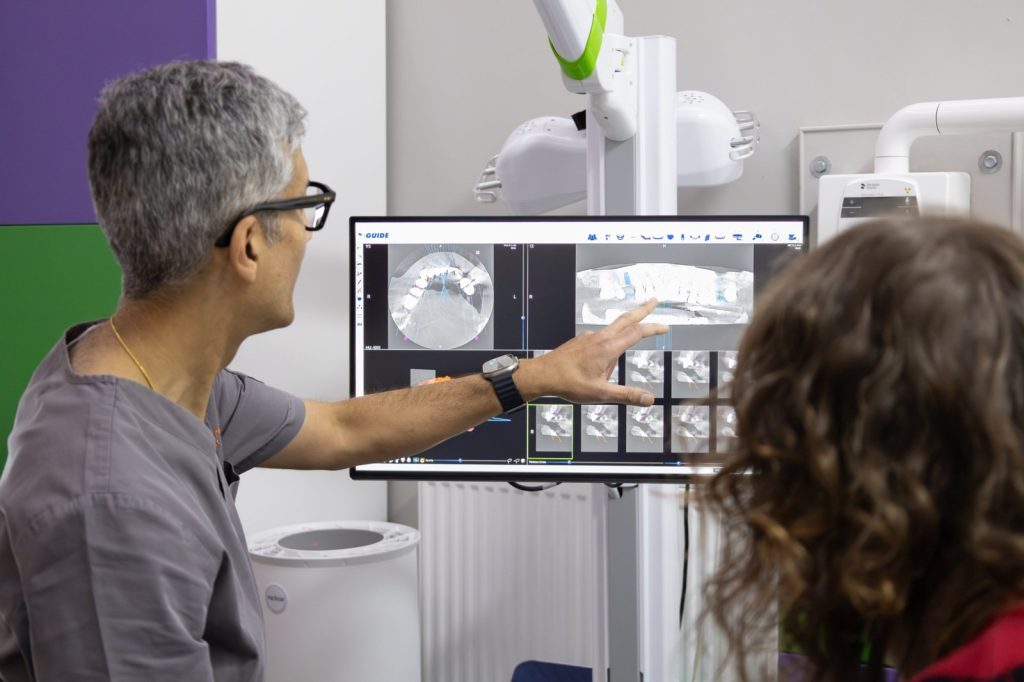
    Dr Neeraj Puri talking a patient through her 3D implant scan on the X-Guide planning screen, Integrated Dentalcare, Edinburgh

    If you’ve been putting off replacing a missing tooth because of the cost, you’re far from alone. Most people we see have been thinking about it for months, sometimes years. Many have collected a few quotes and are waiting for the right price or the right moment.

    This article is for you. Not to pressure you, but to show you the full picture: what waiting actually costs, why the cheapest quote is rarely the cheapest outcome, and how to compare your options properly.

    There’s no such thing as a cheap implant. There’s just an implant where the cost shows up later.

    Doing nothing is not free

    It’s natural to think that delaying treatment costs nothing, and that the gap will simply wait for you. It won’t.

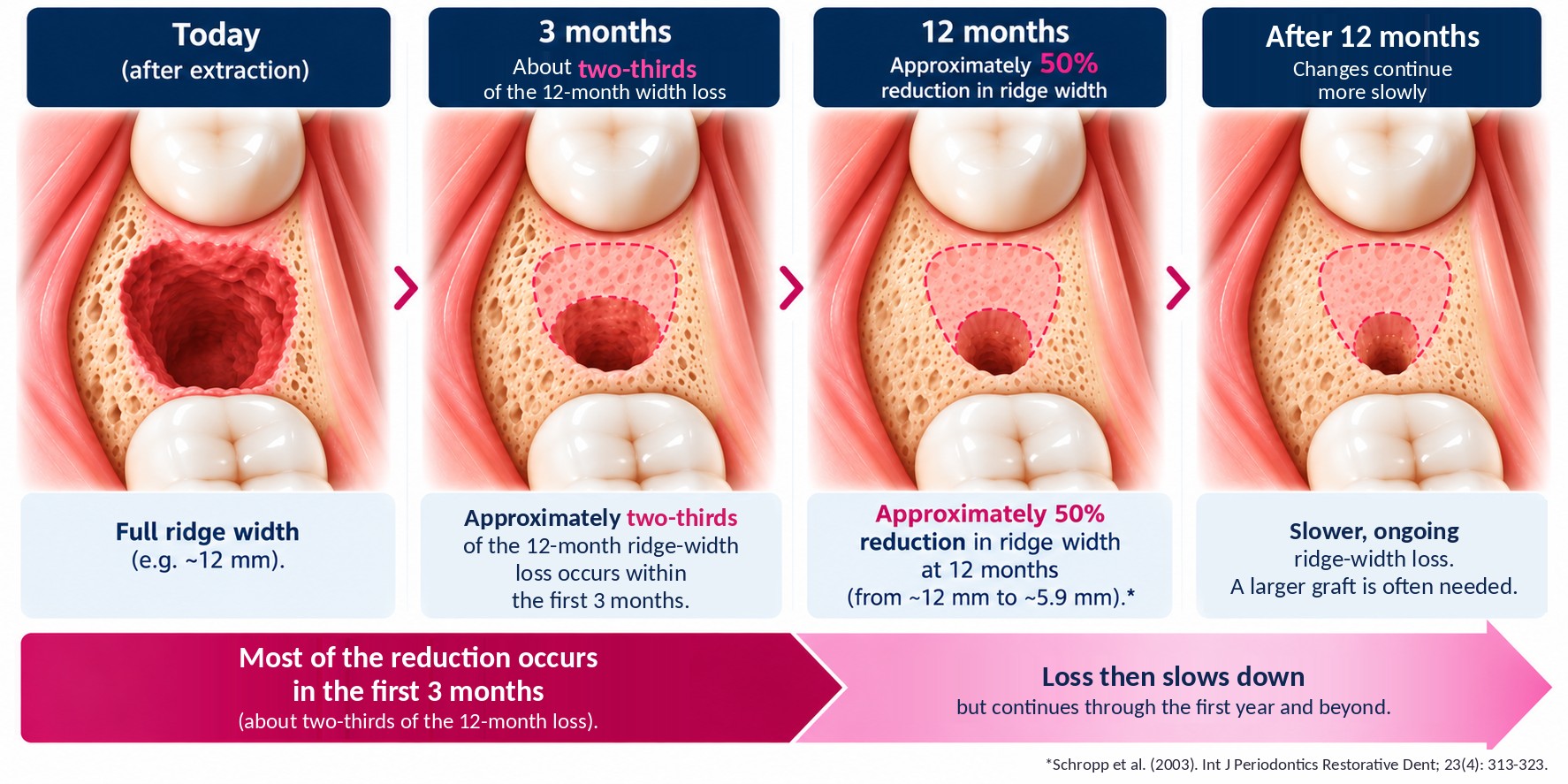
    Once a tooth is lost, the bone that held it starts to shrink. A well-known clinical study by Schropp and colleagues found that around half of the bone width is lost within the first 12 months after a tooth is removed, and about two-thirds of that loss happens in the first three months.

    Why does that matter? An implant needs enough bone to sit in. If a tooth is removed and the socket is grafted at the same time, much of that bone can be preserved. What could be a straightforward implant today can, a year or two later, need a larger bone graft first. That means an extra procedure, extra healing time (often several months) and extra cost.

    Illustration of a tooth socket healing after extraction: about two-thirds of the first year's ridge-width loss happens in the first 3 months, reaching about 50% at 12 months, then slower ongoing loss (Schropp et al. 2003)
    Based on Schropp et al. (2003). Tap to enlarge.

    Better still, if the implant is placed at the same time as the tooth is removed, your body’s natural healing response in the fresh socket works around the implant and helps preserve the gum. That can mean fewer procedures and can shorten treatment by 3 to 6 months.

    Bone loss is not the only change. Neighbouring teeth can drift and tilt into the gap, the opposite tooth can over-erupt, and your bite can shift. Each of these can make the eventual treatment more involved.

    👉 Watch: What happens when teeth are lost

    Waiting doesn’t keep your options open. It tends to close them.

    What waiting can cost you, in real numbers

    Here’s a simple comparison based on our current fees for a single tooth.

     Treat nowWait 1 to 2 years
    Implant (Swiss titanium system)£2,356£2,356
    Crown£1,100£1,100
    Bone graftOften not needed, or a simple socket graft (£774) at the time of extractionA larger graft to rebuild lost bone: from £1,200
    Extra healing timeNoneOften 4 to 6 months
    Extra surgical visitNoYes
    Total£3,456 to £4,230From £4,656

    Prices correct as of October 2026. Every case is different and your exact fee is confirmed after your assessment.

    In other words, putting it off can add £1,200 or more to the bill, plus the extra healing, the extra appointment and the time spent living with a gap. A larger graft costs more because it is more complex: it needs additional materials and more advanced surgical skill to rebuild bone that has already been lost.

    Why the cheapest quote is rarely the cheapest outcome

    Two quotes for “an implant” can describe very different treatments: different materials, different techniques, different levels of planning and different levels of surgeon experience, with very different long-term prospects.

    We use premium, Swiss-manufactured implant systems. That’s a deliberate choice. These systems are backed by decades of published clinical research and made to extremely tight tolerances, with surfaces engineered to bond with bone. An implant isn’t just hardware sitting in your jaw. It’s a titanium or zirconia structure that fuses with living bone and stays part of your body for the rest of your life.

    Lower-cost “copycat” systems can copy the basic shape of a premium implant without the research behind its surface, its long-term data or its manufacturing precision. Those differences don’t show up on a quote. They show up in outcomes, and they show up years later if parts ever need replacing and the system is hard to source.

    Precision you can measure, not just take on trust

    Every practice will tell you its dentist is experienced. It’s hard for you to check. What we’d rather give you is something you can verify: measurable precision.

    We place implants using X-Guide, a dynamic navigation system that works on a similar principle to the guidance used when spacecraft dock with the International Space Station. It guides the placement in real time, continuously tracking position as the procedure happens. That live guidance reduces positional error and adds a margin of safety, particularly near nerves, sinuses and other delicate anatomy.

    X-Guide doesn’t replace skill and experience. It adds a measurable layer of accuracy on top of over 20 years of placing implants, case by case.

    Watch a full X-Guide procedure here.

    The three things that decide whether an implant lasts

    1. Position: exactly where and how the implant is placed. This is where guided navigation makes a measurable difference.
    2. Material: the quality and biocompatibility of the implant system itself. This is where research-backed components earn their cost.
    3. Judgement: the experience to plan not just the implant but the whole mouth around it, including your bite and how everything works together, rather than treating the gap in isolation.

    Cut a corner on any one of these to save money upfront and it’s often the reason an implant needs revisiting a few years later.

    Thinking about treatment abroad?

    Many of our patients have looked at implants in Turkey or elsewhere in Europe, and it’s a completely understandable thing to consider. The price difference can look significant, and there are skilled clinicians all over the world.

    The important thing to remember is that an implant is a surgical procedure, not a purchase. When it’s planned and placed well, it can serve you for decades. When it isn’t, the damage to bone and gum can be harder and more costly to put right than the original problem, often needing more advanced procedures to fix.

    If you’re weighing up treatment abroad, these practical questions are worth asking:

    • How many trips will I need? Implants usually need several months of healing between surgery and the final crown. Factor flights, hotels and time off work into the true cost.
    • Who looks after me when I’m home? If something needs attention after you return, who will see you, and how quickly?
    • Which implant system is being used? Ask for the brand and request the implant record (often called an implant passport). Some systems are difficult for UK dentists to source parts for.
    • What happens if it needs revisiting? Ask what the guarantee covers, and whether it requires you to travel back.

    Our view is simple. You have a choice, and the results tend to follow the choices you make. If you’re going to invest in replacing a tooth, why not do it properly the first time, with an experienced implant dentist, real-time guided placement and a team that is a short journey away for every review?

    What a properly done implant costs at Integrated Dentalcare

    Single implant and crown: £3,456
    Implant £2,356 + crown £1,100

    0% finance available on treatment over £1,000, spread over 6 to 12 months. Over 12 months, that’s £288 a month, with no interest. Subject to status.

    Put another way: if your implant lasts 20 years, that’s less than 50p a day.

    Prices correct as of October 2026.

    6 questions to ask before you accept any implant quote

    Whichever clinic you choose, these questions turn a quote from a single number into a real comparison:

    1. Which implant system will be used, and where is it manufactured?
    2. Will placement be guided or freehand? If guided, by what technology?
    3. Does the quote include everything: assessment, 3D scan, implant, abutment, crown and reviews?
    4. How many years has the dentist been placing implants, and how much of their work is focused on implants?
    5. What guarantee is offered, and what does it actually cover?
    6. If something needs attention in future, who will see me and how quickly?

    Tip: screenshot or print this list and take it with you to every consultation, including ours.

    Your next step: find out what waiting is costing you

    If you’ve been putting this off, the most useful thing you can do is find out where you stand today, before more bone is lost.

    Our Implant Consultation & Whole-Mouth Overview is a 30-minute appointment with Dr Puri to find out whether an implant is right for you, look at the mouth around the gap, and talk through your options and costs. The £119 fee is credited towards your implant treatment if you book your planning appointment within two weeks. There’s no pressure to go ahead. You’ll simply know where you stand and what it would take to fix it properly.

    Prefer to start from home? Aimee, our implant co-ordinator, offers a free video consultation on Microsoft Teams.

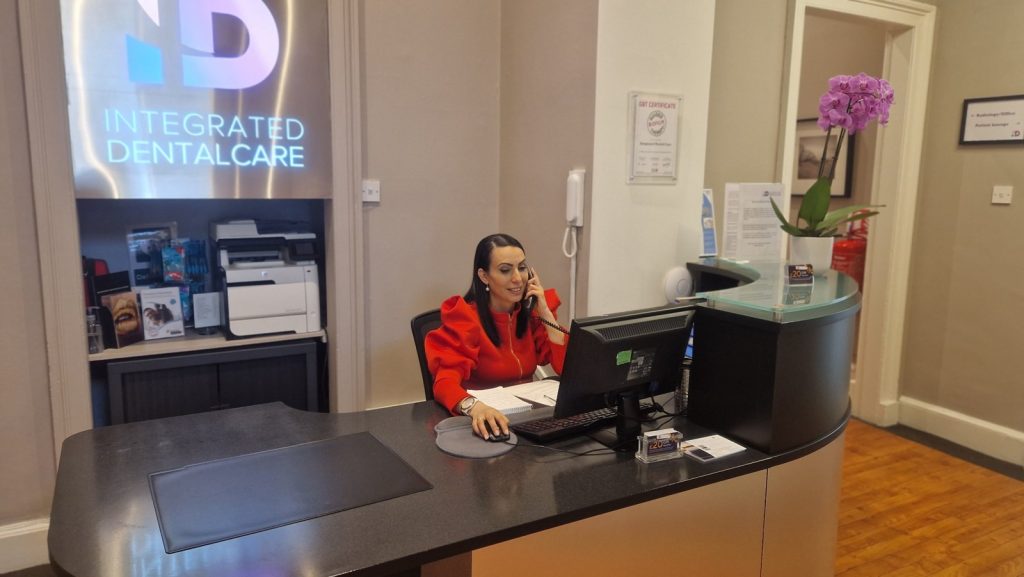
    Sofia answering the phone at the Integrated Dentalcare reception desk on Manor Place, Edinburgh

    👉 Call 0131 225 9093 | Email Sofia (your treatment co-ordinator)

    Frequently asked questions

    How much does a dental implant cost in Edinburgh?

    At Integrated Dentalcare, a single implant and crown costs £3,456 (implant £2,356, crown £1,100), with 0% finance available over 6 to 12 months. Prices correct as of October 2026. Costs vary between clinics depending on the implant system, the technology used and what is included in the quote.

    Does it cost more to wait before getting a dental implant?

    Often, yes. Around half of the bone width can be lost in the first year after a tooth is removed. That can turn a straightforward implant into one that needs a larger bone graft first. At Integrated Dentalcare, a simple socket graft at the time of extraction is £774, while a larger graft later on starts from £1,200, as well as adding an extra procedure and several months of healing.

    What happens if I don’t replace a missing tooth?

    The bone where the tooth was shrinks, neighbouring teeth can drift into the gap, the opposite tooth can over-erupt and your bite can change. These changes can make future treatment more complex.

    Why are some dental implants cheaper than others?

    Price differences usually reflect the implant system used, the research and manufacturing quality behind it, whether placement is guided by navigation technology or done freehand, and what aftercare is included.

    Is it worth getting dental implants abroad?

    It can look cheaper upfront, but implants are a surgical procedure that usually needs several visits over months. Factor in travel, time off work, aftercare once you’re home and what happens if anything needs revisiting. If treatment isn’t done well, correcting it can need more advanced and costly procedures.

    Can I spread the cost of a dental implant?

    Yes. At Integrated Dentalcare, treatment over £1,000 is eligible for 0% finance over 6 to 12 months, subject to status.

    What is X-Guide?

    X-Guide is a dynamic navigation system that guides implant placement in real time, continuously tracking position during the procedure to reduce error and improve safety near nerves and sinuses.

    What determines how long a dental implant lasts?

    Three main factors: precise positioning, the quality of the implant system and the dentist’s clinical judgement in planning around the whole mouth. Good home care and regular reviews matter too.

    References

    Schropp L, Wenzel A, Kostopoulos L, Karring T. Bone healing and soft tissue contour changes following single-tooth extraction: a clinical and radiographic 12-month prospective study. Int J Periodontics Restorative Dent. 2003;23(4):313-323. https://pubmed.ncbi.nlm.nih.gov/12956475/

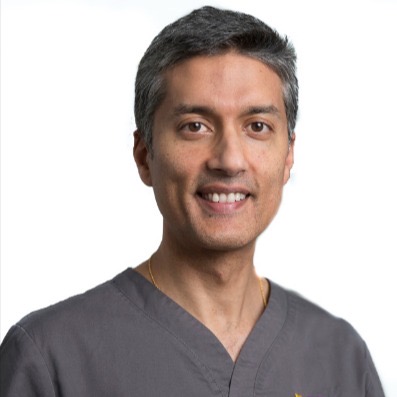
    Dr Neeraj Puri, implant dentist and Clinical Director at Integrated Dentalcare, Edinburgh

    About the author: Dr Neeraj Puri qualified from the University of Glasgow in 1996 and has over 20 years of focused experience in implant dentistry, from single teeth to full-arch restorations. He is Clinical Director of Integrated Dentalcare and Inverleith Dentalcare in Edinburgh.
  • Are Dental Implants Painful?

    Are Dental Implants Painful?

    For those considering dental implants, the question of pain is a primary concern. Dental implant surgery involves the placement of artificial tooth roots into the jawbone, offering a long-lasting solution to missing teeth. In this blog, we will explore the level of pain/ discomfort associated with dental implants and compare it with other common dental procedures. Understanding the pain levels and comparing them can help you make informed decisions about your dental care.

    Ok – let’s agree from the onset that most dental treatments are not pleasurable experiences. Unleashing someone into one of your most delicate and personal spaces takes a lot of trust. It’s for this reason sometimes people chose to avoid addressing problems until they become bigger problems which require more complex treatments which may have many stages. The culmination of this deterioration is quite often loss of a tooth or teeth.

    Losing teeth is obviously a negative experience which becomes necessary because the teeth are painful, fractured, or mobile. Once the tooth/teeth are lost you might want to avoid any dental experiences as you are no longer in pain even though you realise that this might lead to further problems downline. Less teeth having to shoulder the same loads as before results in more stress on each tooth which will lead to faster unravelling and loss of your dentition.

    So, what is stopping you from addressing the issues whilst they are smaller?

    A few gaps are easier to address than extensive loss of teeth. Most people are worried that the procedures might be uncomfortable and painful. Also, since it is elective sometimes people are not motivated to address the situation until it become really debilitating. So, let’s consider each option in turn.

    Are Dental Implants Painful?

    Dental implant surgery is typically performed under local anaesthesia, ensuring that patients feel little to no discomfort during the procedure. Any post-operative discomfort is easily managed with over-the-counter pain medications. If the gum has to be cut open to place implants, then there may be some pain and swelling associated with this. Most implant surgeons have to cut the gum so that they can see the bone to place the implants as well as take measurements. However, newer technologies such as Navigation Guided Surgery have markedly improved this experience. With this technology we are able to digital planning your treatment on a virtual replica of your jaw (without you even being there!). On the day of the treatment this machine guides us very accurately to allow us to place the implant straight through your gum without having to cut any skin. No cuts mean no stitches which means faster healing for you. Many patients comment that they felt little or no discomfort the very next day and they were able to go back to work. This is often the experience you will have if you address the problem as soon as it occurs.

    If you wait longer and the problem worsens i.e. an abscess which destroys the bone around the tooth or the skin deteriorates or the you wear a denture which wears down the bone then you may need additional procedures to address each of these issues in turn before you can have an implant.

    That being said many of these procedures can be achieved using a laser which markedly help with the healing and after discomfort. Other natural products such as PRF (derived from you own blood) has naturally powerful painkillers, immune cells, and anti-inflammatories to help control the healing.

    But my advice – don’t procrastinate. Deal with it sooner and heal faster with much more comfort and less procedures.

    Dental Implants vs. Dental Bridges:

    When comparing dental implants with dental bridges, the pain levels can vary. Dental bridges require the preparation of adjacent healthy teeth to support the prosthetic tooth, which may cause some discomfort after the procedure. However, the pain and sensitivity is usually manageable and diminishes with proper post-operative care. Cutting teeth risks them dying and then you need root canal treatment. Our experience shows that 20% of teeth can die in this manner. Dental implants, on the other hand, do not involve the alteration of adjacent teeth and are often considered more comfortable in the long term. Interestingly, many people forget which teeth have implants as they are so comfortable.

    Dental Implants vs. Dentures:

    Dentures are removable prosthetics used to replace missing teeth. While they do not require surgery, they may cause discomfort during the initial adjustment period as the mouth gets used to the appliance. Ill-fitting dentures can also lead to sore spots and irritation. Dentures also tend to exert side loads on your own teeth not to mention putting pressure on the gum which can wear the jaw bone away. Dentures are seen as a compromise solution which replaces teeth supported by bone with something that sits on the gum.

    It’s like you needing a new hip but instead you are given a crutch.

    Dental Implants vs. Root Canal Treatment:

    Root canal treatment is performed to save a severely damaged or infected tooth. The procedure involves removing the tooth’s nerve and pulp, which can cause mild discomfort during and after the procedure. However, with advancements in anaesthesia and pain management techniques, root canal treatment has become relatively painless. Root treated teeth can also become more prone to fracture as they no longer have a blood supply and hence no access to nutrients.

    Conclusion:

    In summary, dental implant surgery is a relatively painless procedure that provides a long-lasting solution to missing teeth. While some discomfort is expected during the recovery period, it is generally manageable with over-the-counter pain medications or even better, laser bio-stimulation. When compared to other dental procedures like dental bridges and dentures, dental implants often emerge as a more beneficial solution as they support your other teeth and help them last longer.

    It is essential to remember that individual pain tolerance may vary, and consulting with a qualified dentist is crucial to determine the most suitable treatment plan. With proper care and regular dental health checks, dental implants can offer a confident smile and improved oral health for years to come.

    If you’re looking for professional dental implant services, reach out to Integrated Dentalcare where our experienced team ensures a comfortable and pain-free dental experience using the latest technology and a kind touch to help you through your dental journey.